A2L refrigerant service safety checklist
Quick answer
Safe A2L service starts by identifying the exact refrigerant and equipment, following current OEM instructions and adopted code, controlling ignition sources, using compatible tools and recovery equipment, and restoring required leak-detection or mitigation features. R-32 and R-454B are not drop-in replacements for R-410A or for each other.
Common questions
- Can R-32 or R-454B be added to an R-410A system?
- No. Do not retrofit an A2L refrigerant into equipment not listed and designed for it, and do not mix refrigerants. Service the equipment only with the refrigerant identified by its label and current OEM instructions.
- Does EPA Section 608 certification cover A2L safety training?
- Section 608 certification addresses federal refrigerant-service requirements, but A2L work also requires equipment-specific competence, compatible tools, employer procedures, and applicable code and safety training.
- Can A2L refrigerant be vented because it has a lower GWP?
- No. EPA's venting prohibition generally covers ozone-depleting refrigerants and their substitutes during service, maintenance, repair, and disposal. Use approved recovery practices and equipment.
Source note: Reviewed August 2026 against EPA Section 608 and HFC-transition guidance, ACCA A2L training scope, UL's 2025 installation checklist, and AHRI Guideline M-2020 (R2025). Always defer to current equipment labels, OEM instructions, adopted code, and employer safety procedures.
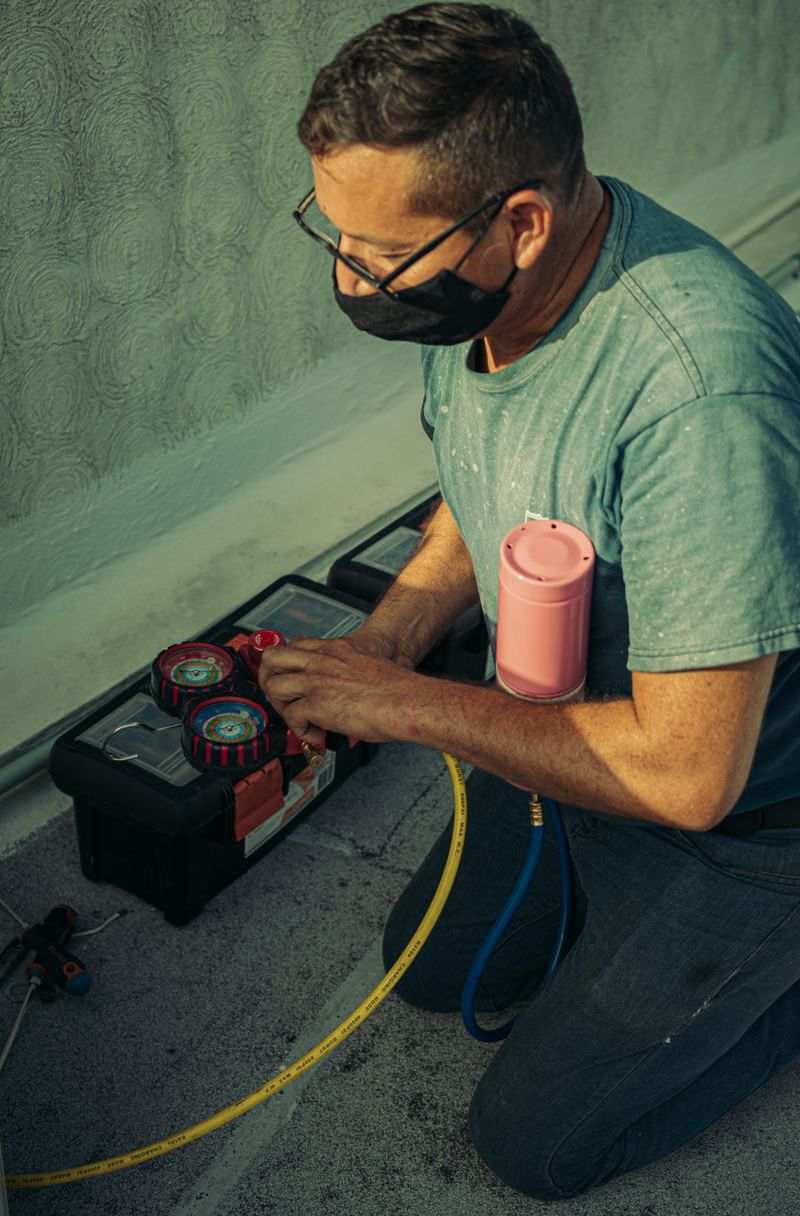
R-32 and R-454B equipment is now part of routine HVAC service, but an A2L label changes the job plan. These refrigerants have lower flammability under their safety classification; that is not the same as nonflammable, and it is not permission to reuse every R-410A habit or tool.
This checklist is for trained HVAC personnel. It organizes the questions that belong in a service plan without replacing the exact equipment label, current OEM instructions, employer safety program, adopted code, or hands-on A2L training.
Before dispatch
- Confirm the complete equipment model and reported refrigerant from the service record.
- Obtain the current OEM installation and service instructions for the matched system.
- Check the authority having jurisdiction and the code edition adopted at the job location.
- Verify technician qualification, EPA Section 608 certification type, and company A2L training requirements.
- Review the expected charge, room, ventilation, leak-detection, and mitigation requirements from approved documents.
- Select recovery, evacuation, charging, leak-detection, electrical, and ventilation equipment specifically compatible with the refrigerant and job.
- Bring the specified fittings, adapters, hoses, seals, cylinders, labels, and replacement components.
Do not infer the refrigerant from brand, product age, or cabinet appearance. Product lines can contain different refrigerants and configurations.
Identify the system at the equipment
Before connecting a tool or opening the circuit:
- Read the outdoor and indoor equipment labels.
- Confirm that the indoor unit, outdoor unit, coil, controls, and required mitigation components are an approved match.
- Reconcile the refrigerant identity with service records and cylinders on the job.
- Note the factory charge, field-charge instructions, line-set limits, and any room-size or application restrictions.
- Locate required refrigerant detection, airflow, shutoff, alarm, or control features.
- Stop if labels are missing, components are mismatched, or the refrigerant cannot be positively identified.
Never mix refrigerants or install R-32 or R-454B in equipment designed for R-410A. R-32 and R-454B are also not interchangeable with each other.
Survey the work area
The work-area plan depends on the equipment, charge, occupancy, room, elevation, ventilation, and adopted code. Follow the OEM and employer procedure to:
- Define and control the work area.
- Identify ignition sources and activities that can create sparks, arcs, flames, or hot surfaces.
- Evaluate natural or mechanical ventilation requirements.
- Check low areas or enclosed spaces where released refrigerant could accumulate.
- Control access by occupants and other trades.
- Position compatible leak-detection and fire-safety equipment as required.
- Plan cylinder movement and storage.
Do not use a generic room-size or charge threshold. UL’s educational checklist emphasizes that system design, refrigerant detection, minimum room requirements, piping, ventilation, and installation details must be verified against manufacturer instructions and adopted code.
Control all energy sources
A2L planning does not replace electrical safety. Follow the employer- and equipment-specific energy-control procedure, including lockout/tagout, stored-energy control, and verified de-energization where required.
Do not defeat an interlock or required refrigerant detection system to keep equipment operating. If a diagnostic procedure requires energized measurements, only a qualified person using the defined safeguards and appropriate instruments should perform it.
Confirm tool and component compatibility
Compatibility must be explicit, not assumed. Verify the current manufacturer rating and instructions for:
- Recovery machine and recovery cylinder.
- Vacuum pump and any required switch or control arrangement.
- Manifold, probes, hoses, seals, and service-port adapters.
- Electronic leak detector and any monitoring instrument.
- Scales and charging equipment.
- Electrical test instruments and non-sparking or ignition-controlled equipment required by the procedure.
- Replacement valves, sensors, motors, relays, boards, and other system components.
AHRI Guideline M addresses unique fittings and service ports for flammable-refrigerant use. Do not remove, defeat, or casually adapt a fitting intended to prevent cross-contamination or connection of incompatible service equipment.
Open the refrigerant circuit only under the approved plan
EPA states that connecting or disconnecting hoses and gauges, adding or removing refrigerant, cutting a refrigerant line, and similar activities require the appropriate Section 608 certification. Apprentices must meet the applicable registration and supervision requirements.
During circuit work:
- Use the OEM sequence and the employer’s A2L service procedure.
- Recover refrigerant into a compatible, properly identified cylinder.
- Do not intentionally vent refrigerant.
- Keep refrigerants separate and prevent cylinder or tool cross-contamination.
- Use the specified leak-test, evacuation, and charging methods.
- Maintain ignition-source and ventilation controls for the full period they are required.
- Stop if the refrigerant identity, charge, equipment listing, or site condition conflicts with the approved plan.
Charging must follow the exact equipment data. Verify airflow and stable conditions before interpreting superheat and subcooling; do not use a universal target or charge by compressor current.
Protect required mitigation features
Some listed systems use refrigerant detection and mitigation functions that can change blower operation, close valves, disable components, or issue a fault. These features are part of the system, not optional accessories.
Before return to service:
- Confirm sensors are the specified type and location.
- Restore covers, barriers, seals, duct connections, and wiring exactly as required.
- Verify mitigation airflow paths are unobstructed.
- Perform the OEM functional test for detection and mitigation controls.
- Do not use an unapproved substitute or bypass to clear a code.
- Document any sensor, control, or firmware replacement.
If the system cannot pass the required functional checks, leave it in the safe state defined by the manufacturer and employer.
Closeout and documentation
Record enough detail for the next technician and the equipment owner:
- Equipment and refrigerant identification.
- Applicable OEM document revision and adopted-code reference.
- Initial and final charge records required by the procedure.
- Refrigerant recovered, added, or transferred.
- Leak-test and repair results.
- Evacuation and commissioning evidence required by the OEM.
- Refrigerant detection or mitigation functional test.
- Tool, cylinder, and fitting compatibility confirmation.
- Updated service label and any required owner information.
Explain to the owner that an A2L system should be serviced by trained personnel familiar with that equipment. A fault code, suspected leak, damaged refrigerant line, or altered mechanical room should trigger qualified evaluation—not a DIY reset or detector bypass.
For the broader transition context, compare R-32, R-410A, and R-454B. Contractors should maintain formal A2L training and update procedures as equipment instructions and locally adopted codes change.
Bottom line
The safe A2L workflow is identify, plan, control, recover, verify, and document. The most important rule is to follow the exact system label, OEM instructions, employer program, and adopted code rather than carrying assumptions over from another refrigerant or model.
When any of those inputs is missing or contradictory, stop and resolve it before opening the circuit.
Sources and image credit

ThermalTechPro Editorial Team
Independent trade-focused editorial team