AC capacitor vs. contactor failure symptoms
Quick answer
A weak capacitor more often shows up as a motor that struggles to start, hums, overheats, or stops intermittently. A contactor problem more often interrupts the command or power path, causing chatter, delayed engagement, or an outdoor unit that never energizes. Symptoms overlap, so a qualified technician must test the circuit against the unit's wiring diagram and specifications.
Common questions
- Can a bad AC capacitor look like a bad contactor?
- Yes. Either fault can leave the outdoor unit silent, create intermittent operation, or contribute to a no-cooling complaint. The sequence of operation and model-specific electrical measurements are needed to separate them.
- Is a swollen capacitor always the whole problem?
- No. Swelling or leakage is useful evidence, but the technician should still check the affected motor, wiring, terminals, and operating conditions so a replacement component is not exposed to the original cause.
- Should a homeowner open the outdoor unit to check these parts?
- No. The cabinet can contain line voltage and stored electrical energy. Homeowners should stop at thermostat, filter, breaker, disconnect-position, and outdoor-obstruction checks, then call a qualified HVAC technician.
Source note: Reviewed August 2026 against OSHA electrical-work and hazardous-energy guidance. Equipment-specific diagnosis, stored-energy control, and component acceptance criteria must follow the employer's procedure and current OEM service information.
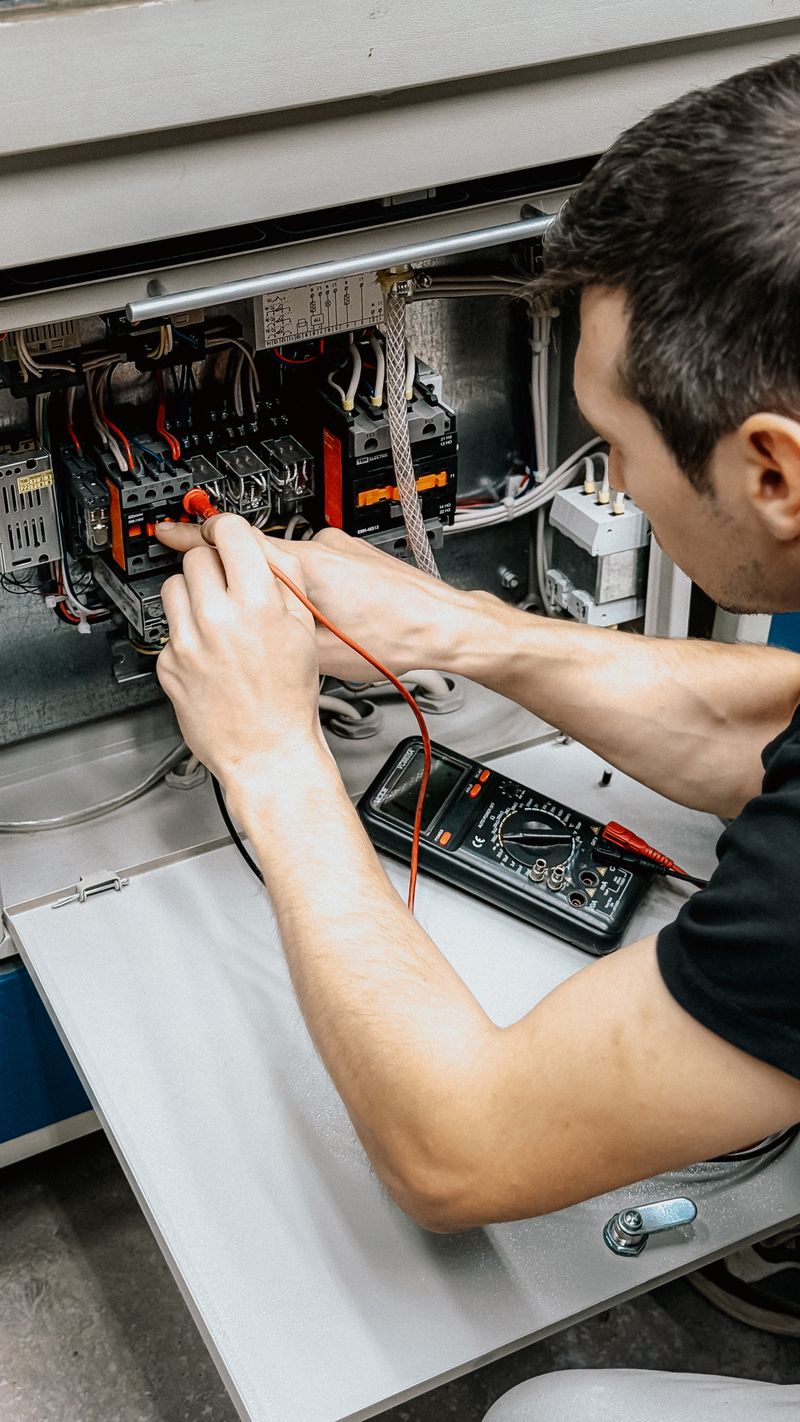
An air conditioner that clicks but will not start can send a technician toward two common suspects: the capacitor and the contactor. Both sit in the outdoor unit’s electrical system, and either can produce a no-cooling call, but they perform different jobs and leave different patterns of evidence.
The useful question is not “Which part should I replace first?” It is where the sequence of operation stops and why. This comparison helps technicians organize that diagnosis and gives homeowners a clear boundary between safe observations and electrical service work.
What each component does
A run capacitor helps a compressor or fan motor operate with the phase relationship intended by the motor design. Many residential condensers use a dual-run capacitor serving both loads. Some equipment uses separate run capacitors or a start-assist arrangement, so the wiring diagram matters.
A contactor is an electrically controlled switch. When the control circuit calls for cooling and the required safeties are satisfied, its coil operates the power contacts that feed the outdoor loads. A contactor can fail at the coil, contacts, terminals, or mechanical movement.
That difference creates a helpful first split:
- A contactor fault can prevent power from being delivered when the call is present.
- A capacitor fault can leave power available but a connected motor unable to start or run correctly.
- A separate control, safety, motor, wiring, or supply problem can imitate either one.
Symptom comparison
| Observed pattern | Capacitor is more plausible when… | Contactor is more plausible when… |
|---|---|---|
| Outdoor unit is silent | A protective device has opened after a motor struggled or overheated | The coil never pulls in, the mechanism is stuck, or damaged contacts do not pass power |
| Humming without normal startup | A motor is energized but lacks the electrical conditions needed to start | The contactor chatters or cannot hold firmly because of a control-voltage or mechanical issue |
| Intermittent operation | Capacitance changes with temperature or the motor cycles on protection | Pitted contacts, a weak coil, loose connections, or an unstable control signal interrupt operation |
| Fan and compressor behave differently | One section of a dual-run capacitor or one motor circuit is affected | One contact pole or downstream connection is damaged |
| Visible damage | The capacitor case is swollen, leaking, or heat damaged | Contacts are severely pitted, the housing is discolored, or a terminal is heat damaged |
These are diagnostic clues, not pass/fail rules. For example, a compressor that will not start may have a mechanical problem, low supply voltage, damaged wiring, an open protection device, or an incorrect control state. A chattering contactor can be the victim of unstable control voltage rather than the root cause.
Safety comes before diagnosis
The outdoor cabinet may contain line voltage even when the thermostat is off. Capacitors can retain stored electrical energy. OSHA requires live parts to be de-energized before qualified employees work on or near them unless a specific exception applies, and equipment not properly locked or tagged must be treated as energized.
Before opening or handling the equipment, technicians must follow the employer- and equipment-specific energy-control procedure, apply lockout/tagout as required, control stored energy, and verify the de-energized condition with suitable test equipment. OSHA also states that capacitors being handled during stored-energy control are to be treated as energized.
Homeowner stop point: Do not remove the service panel, contact terminals, defeat an interlock, or improvise a capacitor-discharge method. If a breaker trips repeatedly, leave it off and arrange qualified service.
A qualified technician’s diagnostic logic
1. Confirm the complaint and operating state
Record what the thermostat is requesting, which indoor and outdoor components operate, whether the fault is constant or intermittent, and whether an equipment code or safety has opened. This prevents an electrical component from being blamed for a thermostat, condensate, pressure-safety, or communication fault.
2. Use the wiring diagram to follow the sequence
Identify the exact control path and the loads the contactor supplies. Confirm that the installed capacitor configuration and ratings match the current equipment documentation. Prior repairs sometimes leave an incorrect component or misplaced conductor that makes the symptom misleading.
3. Inspect only after establishing the safe work condition
Look for loose or heat-damaged terminals, rubbed conductors, contamination, insects, deteriorated insulation, or evidence of water entry. A swollen capacitor or badly damaged contact is meaningful, but a normal-looking component can still be faulty.
4. Evaluate the contactor in context
Determine whether the control system is actually commanding the contactor and whether safeties permit operation. Then evaluate the coil, mechanical movement, contacts, terminal condition, and power path using the OEM procedure and properly rated instruments.
If the coil command is unstable, trace the control issue instead of replacing a contactor that is responding to bad input. If a connection has overheated, correct the connection and inspect the conductor and load before returning the unit to service.
5. Evaluate the capacitor and connected load
After stored energy has been controlled under the approved procedure, compare the component’s measured condition with its marked rating and the OEM acceptance criteria. Check the connected motor and wiring as part of the same diagnosis.
A replacement capacitor is not a cure for a motor with damaged bearings, abnormal current, an incorrect supply condition, or another fault that caused repeated starting stress. Use the equipment’s specified type, capacitance, voltage rating, mounting, and terminal arrangement.
6. Reassemble and verify the complete cycle
Restore all covers and safeguards before the functional test. Verify startup, fan and compressor operation, temperature and current behavior, control stability, and shutdown in accordance with the manufacturer’s service data. Document the failed evidence and the final operating condition.
What homeowners can check safely
Homeowners can provide useful information without entering the electrical compartment:
- Confirm the thermostat is in cooling mode and the setpoint calls for cooling.
- Check whether the indoor blower runs and whether the outdoor unit is silent, humming, or cycling.
- Replace a visibly dirty filter with the correct size and type.
- Keep leaves and debris away from the outdoor coil without removing panels.
- Note any burning smell, repeated breaker trip, error code, or recent power event.
Our broader common AC problems guide covers these low-risk checks. For repeated electrical failures, a properly selected HVAC surge protector may be worth discussing after the underlying fault is corrected.
Bottom line
Capacitor symptoms usually center on how a motor starts and runs; contactor symptoms usually center on whether a stable command and power path reach the loads. Because those paths interact, symptoms alone cannot confirm the failed part.
A qualified technician should prove the failure from the wiring diagram, safe inspection, model-specific measurements, and a complete operational test. That approach prevents parts swapping and catches the loose connection, motor problem, control fault, or supply issue that could damage the next component.
Sources and image credit

ThermalTechPro Editorial Team
Independent trade-focused editorial team