Duct Insulation Guide: R-Values, Materials, and Where to Insulate
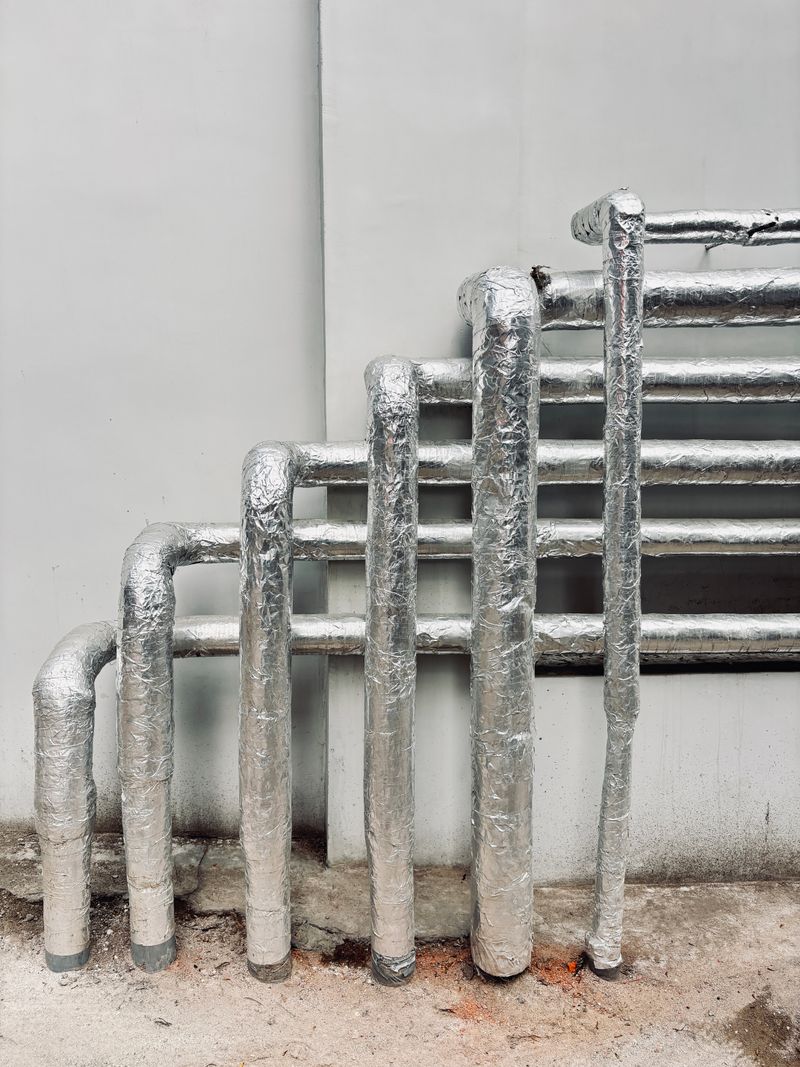
Ducts that run through unconditioned spaces — attics, crawlspaces, garages, and exterior wall cavities — lose significant amounts of heating and cooling energy before it reaches the rooms you are trying to condition. Research from the Lawrence Berkeley National Laboratory found that the average forced air duct system loses 20–30% of conditioned air due to leaks and conduction losses combined.
Proper duct insulation addresses the conduction portion of this loss and is one of the most cost-effective ways to improve HVAC system efficiency in homes with ducts running through unconditioned spaces.
Why Duct Insulation Matters
When hot conditioned air travels through a duct in a 130°F attic in summer, heat transfers from the hot attic air into the duct, warming the supply air before it reaches the room. The system has to run longer to deliver the same amount of cooling, and the air arriving at the register is warmer than it should be.
In winter, the reverse happens — warm supply air loses heat to a cold attic or crawlspace before reaching the room.
The energy penalty depends on:
- The temperature difference between the duct and the surrounding space
- The length of duct run in unconditioned space
- The quality and R-value of existing duct insulation
In hot climates where attic temperatures regularly exceed 120°F, duct conduction losses are particularly severe. A single 30-foot supply run from the air handler to a far room can lose meaningful BTUs if the duct is poorly insulated or uninsulated.
Understanding R-Values
R-value measures thermal resistance — how well a material resists heat transfer. Higher R-values indicate better insulation performance.
For duct insulation, R-value is important but so is installation quality. A high-R duct wrap with gaps, tears, or crushed sections provides significantly less protection than its rated value suggests.
Code Requirements
The 2021 International Energy Conservation Code (IECC), adopted by most states, requires:
| Location | Minimum R-Value |
|---|---|
| Ducts in attics | R-8 |
| Ducts in other unconditioned spaces (crawlspaces, garages) | R-6 |
| Ducts in conditioned space | None required |
Many older homes have ducts insulated to R-4 or R-6 only in attics — below current code requirements. When ductwork is replaced or a new system installed, code compliance requires upgrading to current R-values.
Recommended R-Values
For maximum efficiency, particularly in hot climates with very high attic temperatures, R-8 is the minimum, and many energy efficiency programs recommend R-12 to R-16 for attic ductwork.
Insulation beyond R-16 for ducts shows diminishing returns. The incremental benefit of going from R-16 to R-24 is much smaller than going from R-4 to R-8.
Duct Insulation Materials
Fiberglass Duct Wrap
The most common duct insulation material for rectangular sheet metal ducts. Fiberglass duct wrap comes in rolls with a foil-faced backing (FSK — foil-scrim-kraft or similar) that serves as a vapor retarder.
Available R-values: R-4, R-6, R-8 (standard; R-8 typically requires 3–4 inches of fiberglass) Application: Wrapped around rectangular ducts and secured with staples or wire, with all seams sealed with foil tape.
Advantages:
- Widely available and affordable
- FSK facing provides vapor retarder and reflective surface
- Easy to install in most configurations
Disadvantages:
- Must be handled carefully to avoid compression (compressed fiberglass loses R-value)
- Vapor barrier must be maintained — tears compromise moisture protection
- Not suitable for underground or high-moisture environments
Cost: $0.30–$0.80 per square foot (material only)
Pre-Insulated Flexible Duct
The most commonly used duct product in residential construction. Flexible duct consists of a plastic inner liner surrounded by fiberglass insulation enclosed in an outer jacket.
Available R-values: R-6 and R-8 (most common) Application: Installed as the duct itself — replaces rigid duct in many residential applications. Must be fully extended and not compressed.
Advantages:
- No additional insulation required — insulation is built in
- Installs quickly
- Available everywhere, affordable
Disadvantages:
- Compression or kinking dramatically reduces both airflow and effective R-value
- Higher airflow resistance than equivalent rigid duct when even slightly compressed
- Not suitable for high-moisture areas without appropriate outer jacket
Cost: $1.00–$2.50 per linear foot for R-6, $1.50–$3.50 for R-8
Duct Board (Rigid Fiberglass)
Rigid fiberglass duct board is used to fabricate ductwork that has integral insulation — the duct is made from insulated board rather than from sheet metal and then wrapped.
Available R-values: R-4 and R-6 (typical; R-8 is thicker and less common) Application: Fabricated on-site by the HVAC installer. Joints sealed with FSK tape or mastic.
Advantages:
- Integral insulation — no wrapping required
- Quieter than sheet metal (fiberglass absorbs sound)
- Good corrosion resistance
Disadvantages:
- More expensive than sheet metal + wrap
- Cannot be used for return ducts in some applications
- Interior liner can deteriorate with moisture exposure over many years
Foam Board Insulation
Rigid foam board (polyisocyanurate, XPS, EPS) is sometimes used to insulate ductwork in specialized situations — particularly underground ducts or in crawlspaces where moisture resistance is critical.
Foam board provides excellent R-value per inch (R-4 to R-7 per inch depending on type) and does not absorb moisture. It is not a standard duct wrap material but is valuable for specific applications.
Spray Foam
Open or closed-cell spray foam is sometimes used in crawlspaces or to seal around duct penetrations. It is not a primary duct insulation material but contributes to both sealing and insulation in conjunction with other methods.
Where to Prioritize Insulation
Attic Ducts — Highest Priority
If your system has supply or return ducts running through an unconditioned attic, this is where improved insulation pays off most. Attic temperatures in hot climates frequently exceed 120–140°F, creating enormous thermal drive against your supply ducts.
Best approach: Seal all duct joints with mastic before insulating, then install R-8 minimum (R-12 preferred for hot climates). Seal any tears or gaps in the existing insulation.
Even better: move attic ducts into conditioned space by encapsulating them under spray foam insulation applied to the roof deck, converting the attic to conditioned space. This eliminates both conduction and leakage losses from attic ducts simultaneously.
Crawlspace Ducts — Second Priority
Crawlspaces are cooler than attics in summer but can be very cold in winter and are often humid. Use moisture-resistant insulation (rigid foam, foil-faced fiberglass) and ensure all vapor barriers are intact.
Garage Ducts — Third Priority
Unconditioned garages can be extremely hot in summer and cold in winter. Ducts through garages should be insulated to R-8 minimum with attention to all connections and transitions.
DIY vs. Professional Installation
DIY-appropriate: Wrapping exposed rectangular ducts in accessible areas (basement, garage, short crawlspace) with fiberglass duct wrap is a straightforward project for a handy homeowner. The Owens Corning QuietZone Duct Liner is appropriate for accessible areas. Use foil HVAC tape (not standard duct tape, which degrades quickly) to seal all seams.
Professional-appropriate: Attic duct work, complex routing, flexible duct replacement, and any work requiring cutting into existing ductwork or connections.
For sealing tape, use 3M 3380 Foil Tape or mastic sealant rather than traditional “duct tape,” which peels and fails over time in temperature extremes.

ThermalTechPro Editorial Team
Independent trade-focused editorial team