Essential HVAC Tools Every Technician Needs
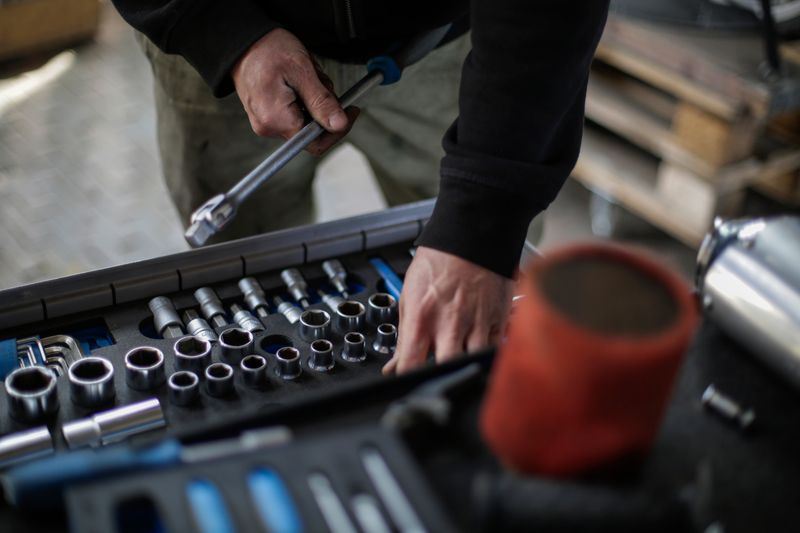
Whether you are building your first HVAC tool kit as an apprentice or refining a seasoned professional’s setup, having the right tools makes the difference between an efficient service call and a frustrating one. HVAC work spans refrigeration, electrical, combustion, and sheet metal — each demanding specialized instruments.
This guide covers every essential tool category with recommendations at various price points.
Manifold Gauge Set
The manifold gauge set is the foundational diagnostic tool for refrigeration and air conditioning work. It measures suction and discharge pressures, allows you to charge or recover refrigerant, and connects the refrigerant circuit to a vacuum pump.
Analog vs. digital: Analog gauge sets are durable and inexpensive but require refrigerant-specific pressure-temperature (PT) charts for interpretation. Digital manifold gauges display superheat and subcooling calculations automatically, significantly speeding up diagnostics.
Refrigerant compatibility: Ensure your gauge set is rated for the refrigerants you service. With the transition from R-410A to R-454B and R-32 (both A2L), confirm your gauges are rated for A2L refrigerants.
Do not choose by an old model recommendation alone. Use the current HVAC manifold gauge comparison to match exact refrigerants, rated pressure, hoses and fittings, port layout, temperature inputs, evacuation workflow, and documentation needs. It distinguishes Fieldpiece’s current SM382V and SM482V models from legacy SMAN products and separates manifolds from recovery machines.
Vacuum Pump
A quality vacuum pump is essential for proper system evacuation before charging with refrigerant. Inadequate evacuation leaves moisture and non-condensable gases in the system, reducing efficiency and shortening compressor life.
CFM rating: Higher cubic feet per minute (CFM) ratings evacuate systems faster. A 6–8 CFM pump is appropriate for most residential work. Larger commercial systems benefit from 10+ CFM pumps.
Two-stage vs. single-stage: Two-stage pumps achieve deeper vacuums (lower micron levels) than single-stage. Two-stage is strongly recommended for any work beyond basic residential. The industry standard for proper evacuation is 500 microns or below.
Oil maintenance: Vacuum pump oil must be changed regularly. Dark, milky, or contaminated oil dramatically reduces pump effectiveness.
Recommended: The JB Industries DV-200N 7 CFM Two-Stage Vacuum Pump is a widely trusted professional pump with excellent vacuum depth and reasonable price for a two-stage unit.
Digital Micron Gauge
A vacuum gauge (micron gauge) measures the depth of vacuum achieved during system evacuation — essential for verifying proper evacuation before charging.
Never trust the vacuum reading on your manifold gauge set for evacuation verification. The low-side gauge is not accurate enough at the micron levels required for proper evacuation. A dedicated digital micron gauge is a separate, essential tool.
Recommended: The JB Industries DM-3 Eliminator Digital Manifold Micron Gauge is a reliable, professional-grade micron gauge with a digital display and good accuracy in the ranges needed for proper evacuation verification.
Digital Multimeter
HVAC technicians perform extensive electrical diagnostics — testing voltage, current, capacitor microfarad ratings, resistance, and continuity. A quality multimeter is used on virtually every service call.
What to look for:
- True RMS measurement (accurate on variable-frequency systems and motor circuits)
- Capacitor testing (microfarad measurement is essential for HVAC)
- Temperature probes (useful for refrigeration and airflow testing)
- Cat III or Cat IV safety rating for the voltages you work with
Recommended: The Fieldpiece HS36 Expandable Clamp Meter is designed specifically for HVAC work, with built-in temperature, capacitor, and clamp ammeter functions that eliminate the need to carry multiple meters.
Clamp Ammeter
A clamp ammeter measures current draw without breaking the circuit — essential for diagnosing compressors, motors, and heater elements. Checking running amperage against the equipment nameplate’s Rated Load Amps (RLA) and Maximum Circuit Ampacity (MCA) is a standard diagnostic step.
Many digital multimeters include a clamp meter function, but if yours does not, a dedicated clamp meter is necessary.
Refrigerant Leak Detector
Finding refrigerant leaks quickly saves time and refrigerant. Electronic leak detectors are faster than using dye and a UV light, particularly for locating leaks in inaccessible areas.
Types:
- Heated diode detectors: Sensitive and fast, the standard professional choice
- Infrared detectors: Very accurate with fewer false positives, but higher cost
- Ultrasonic detectors: Useful for large leaks or finding approximate location before using electronic detection
With A2L refrigerants (R-454B, R-32) becoming standard, using an appropriate leak detector rated for A2L refrigerants is important.
Recommended: The Inficon Tek-Mate Refrigerant Leak Detector is a heated diode detector known for fast response and sensitivity across multiple refrigerants.
Thermometer / Temperature Probe
Measuring supply air temperature, return air temperature, refrigerant temperatures (for superheat and subcooling), and heat exchanger surfaces requires accurate temperature probes.
Types:
- Digital thermocouple probes: Fast response, good accuracy, replaceable probes
- Infrared non-contact thermometers: Measure surface temperature without contact — useful for motor housings, electrical panels, and checking temperature uniformity
- Pipe clamp probes: Clip onto refrigerant lines to measure line temperature for superheat/subcooling calculations
Many technicians carry both a digital probe thermometer and an infrared gun.
Recommended: The Klein Tools IR5 Dual Laser Infrared Thermometer is a reliable, fast infrared thermometer well-suited for general HVAC surface temperature measurements.
Combustion Analyzer
For any work on gas furnaces, boilers, or other combustion equipment, a combustion analyzer is essential for verifying safe and efficient combustion. It measures:
- Flue gas CO₂ and CO concentrations
- Flue gas temperature
- Combustion efficiency percentage
- Excess air percentage
- Draft (some models)
Carbon monoxide detection is a safety issue. A furnace producing elevated CO is a life-safety hazard. A combustion analyzer detects this during service and allows adjustments to burner air-fuel ratio.
Recommended: The Testo 310 Residential Combustion Analyzer is a well-regarded entry-to-mid-level analyzer appropriate for residential furnace and boiler work.
Airflow and Static Pressure Tools
Measuring duct static pressure and airflow is essential for diagnosing comfort problems, verifying proper system airflow, and commissioning new equipment.
Tools needed:
- Magnehelic gauge or digital manometer: Measures static pressure in the duct system
- Flow hood or anemometer: Measures airflow at registers (professional flow hoods are expensive; anemometers are an affordable alternative for spot checks)
Recommended: The Fieldpiece SDMN6 Wireless Differential Pressure Manometer wirelessly displays static pressure readings on a smartphone, keeping the technician at the equipment while reading results remotely.
Nitrogen Equipment
Dry nitrogen is used to pressure-test refrigerant circuits before charging (checking for leaks) and to purge systems during brazing. A nitrogen regulator and cylinder connection equipment are necessary for any refrigeration work.
Look for a regulator rated for the pressures required (typically 0–600 PSI for pressure testing) with a pressure relief valve for safety.
Hand Tools and Sheet Metal Tools
Basic hand tools round out the toolkit:
- Tubing cutters: For cutting copper refrigerant lines cleanly. Have multiple sizes (1/4” to 1-1/8”).
- Tube bender: For making smooth bends in copper tubing without collapsing the tube.
- Flaring tool: For creating flare connections in copper tubing.
- Swaging tool set: For creating swage connections.
- Sheet metal snips: Offset, straight, and aviation snips for ductwork.
- Cordless drill/driver: A basic, essential power tool.
- Wire strippers and crimpers: For electrical connections.
Carrying and Organization
A well-organized service van saves time on every call. Technicians who can locate their tools quickly complete more jobs and fewer callbacks. Stackable tool cases, pegboard van organizers, and dedicated refrigeration equipment cases each have their place in a well-organized setup.
Building a complete professional HVAC toolkit represents a significant investment — easily $3,000–$8,000 for quality tools across all categories. Starting with the manifold gauges, vacuum pump, micron gauge, and multimeter covers the most fundamental needs and allows you to expand from there as work demands it.

ThermalTechPro Editorial Team
Independent trade-focused editorial team