Heating and Cooling Your Basement: Options, Costs, and Best Practices
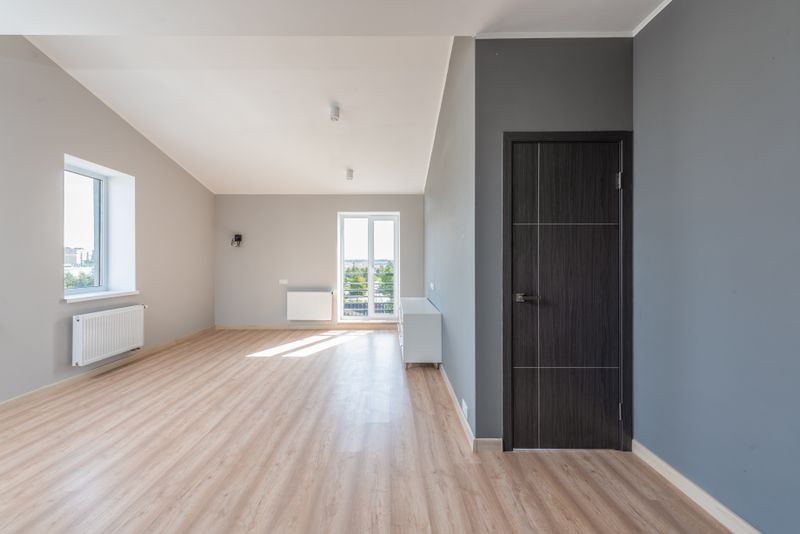
Basements present a unique set of challenges for heating and cooling. They are below grade, meaning they are partially insulated by the earth, naturally cooler than the floors above, and often poorly connected to the home’s main HVAC system. Finishing or conditioning a basement requires understanding these unique characteristics and choosing approaches that work with them rather than against them.
Understanding Basement Thermal Characteristics
Unlike above-grade rooms, basements have a significant heat exchange relationship with the earth surrounding them. Ground temperature below the frost line remains relatively stable year-round — typically 50–55°F in most of the continental United States.
In winter: The earth helps moderate basement temperatures. Even an unheated basement rarely drops below 40–45°F in most climates because the surrounding earth maintains that temperature.
In summer: The same earth stabilizes basement temperatures, making basements naturally cool. Many homeowners find their basements are comfortable in summer without any cooling at all.
The moisture problem: The earth surrounding the basement contains moisture, which moves through concrete walls and floors via vapor diffusion and capillary action. This makes humidity control — not just temperature control — the defining challenge of basement conditioning.
Step 1: Address Moisture Before Adding HVAC
Any basement conditioning strategy must address moisture first. Adding heating and cooling to a wet or damp basement without addressing the moisture source creates conditions for accelerated mold growth, structural damage, and poor air quality.
Exterior Water Management
- Grade: Ensure the ground slopes away from the foundation for at least 6 feet around the perimeter.
- Gutters and downspouts: Clean gutters, properly sloped, with downspouts discharging at least 6 feet from the foundation.
- Downspout extensions: If downspouts discharge near the foundation, add extensions.
Interior Moisture Management
- Vapor barrier on walls and floor: Dimple mat or spray polyurea vapor barrier prevents moisture migration through concrete.
- Sump pump: If groundwater accumulation is an issue, a properly functioning sump pump with a battery backup is essential.
- Dehumidifier: A properly sized dehumidifier maintains relative humidity below 60% to prevent mold conditions.
Only after moisture is controlled should HVAC equipment be added to a finished basement.
Heating Options for Basements
Extending the Existing HVAC System
If your home has a forced-air system with available capacity, extending the duct system into the basement is often the most cost-effective and integrated solution.
Requirements:
- The existing air handler/furnace must have remaining capacity beyond what the existing system needs
- Ductwork can be routed from the furnace location to supply registers in the basement
- Return air must also be provided — either through dedicated return ducts or through a doorway at the base of the stairs
Cost: $500–$2,500 for ducting extension depending on complexity and number of supply runs.
Advantages:
- Integrated with the whole-home thermostat
- Uses existing equipment capacity that may already be available
- No additional equipment to maintain
Disadvantages:
- Requires available equipment capacity
- Duct runs can be challenging in some basement configurations
- Single-zone control (the basement follows the main floor thermostat)
Ductless Mini-Split
A mini-split is an excellent choice for finished basements, providing independent temperature control, both heating and cooling, and very efficient operation.
Advantages:
- Independent temperature control (basement can be set differently from the main floor)
- Provides cooling as well as heating
- Very efficient
- No ductwork modifications needed
- Ideal when the existing system lacks capacity
Cost: $2,000–$5,000 installed for a single-zone system
For a typical 400–800 sq ft finished basement, a 9,000–18,000 BTU (0.75–1.5 ton) mini-split is usually appropriate.
Electric Baseboard Heaters
Electric baseboard heaters provide zone-level heating with low installation cost. Each room or zone has its own thermostat and heater, providing precise control.
Best for:
- Basements used occasionally
- Supplemental heat when the main HVAC system is inadequate
- Rental units or workshops where installation budget is limited
Disadvantages:
- No cooling capability
- High operating cost compared to gas or heat pump heating
- Each room needs its own heater and thermostat
Cost: $60–$250 per heater, DIY installation feasible for most homeowners.
Radiant Floor Heating
A basement slab is an excellent candidate for radiant floor heating. Electric mat systems can be installed under flooring in a finished basement during construction or renovation.
Process: Electric heating mats are installed beneath tile, laminate, or engineered wood flooring. A floor thermostat controls the system, preventing the floor from getting too warm.
Cost: $10–$20 per square foot installed for a finished basement floor area.
Advantages:
- Exceptionally comfortable — warm floors feel dramatically different from cold concrete under finished flooring
- Even heat distribution
- Quiet
- Works with any flooring type compatible with radiant heat (tile is ideal)
Important note: Hydronic radiant floor heating requires cutting the slab or pouring a new topping slab. This is a major construction project appropriate for new construction or major renovation, not a standard retrofit.
Cooling Options for Basements
Natural Cool: Does Your Basement Need Cooling?
Many basements in cooler climates are naturally cool enough in summer that they do not need mechanical cooling. The earth temperature of 50–55°F keeps basement temperatures moderate even without air conditioning. Test this by monitoring your basement temperature during peak summer heat before investing in cooling equipment.
Ductless Mini-Split
For basements that do need cooling — particularly in warmer climates or basements with significant solar gain through windows — a mini-split provides efficient cooling as well as heating with a single system.
Extending Central AC Ductwork
If you are already extending heating ductwork to the basement, cooling is included automatically if you have a central air conditioning system. The same supply and return ducts that distribute heat in winter carry cooled air in summer.
Portable or Window Air Conditioners
For occasional cooling in basement bedrooms or living spaces, a portable air conditioner or window unit is a low-cost option. Basements often have small windows near the ceiling that can accommodate through-wall units or window units.
Caution: Portable air conditioners in basements can increase humidity (the exhaust hose draws air from the space, creating negative pressure that pulls humid air in from outside). In basements already prone to high humidity, portable ACs can worsen moisture conditions. Monitor humidity when using portable cooling in a basement.
Controlling Humidity in a Conditioned Basement
Maintaining humidity below 60% is the most important HVAC consideration for basements. Even with effective heating and cooling, high humidity causes:
- Mold growth on framing, drywall, and stored items
- Musty odors that affect the entire home
- Condensation on cold surfaces
- Deterioration of stored materials
Dehumidifier Selection for Basements
For most finished basements, a 50-pint dehumidifier (post-2019 DOE standard rating) is appropriate. Set it to maintain 45–55% relative humidity.
Use a gravity drain setup if a floor drain is available — running the drain hose to a floor drain or sump pit eliminates the need to empty the bucket. The Frigidaire 50-Pint Dehumidifier is a reliable choice for this application.
HVAC Integration
Central air conditioning also dehumidifies as it cools — a well-designed central system removes significant moisture from the air during cooling season. In very humid basements, adding dedicated dehumidification provides year-round control, not just during the cooling season.
Practical Recommendations
For most homeowners finishing a basement:
- Address moisture first — waterproofing, grading, sump pump, vapor barriers
- Add a dehumidifier sized for the basement area
- Extend existing HVAC if capacity exists — lowest cost integrated solution
- Install a mini-split if the existing system lacks capacity or if independent zone control is desired
- Add radiant floor heat if comfort is a high priority and the project budget allows
- Skip cooling if your climate makes it unnecessary — monitor actual summer temperatures before investing in cooling
A well-conditioned basement extends your living space, increases home value, and improves air quality for the entire house — since basement air eventually migrates upward through the stack effect.

ThermalTechPro Editorial Team
Independent trade-focused editorial team