HVAC Installation Cost Guide 2026: Compare Complete Quotes
Quick answer
There is no reliable national HVAC installation price for every home. Compare current local quotes built from the same load, exact matched equipment, duct and electrical scope, refrigerant work, controls, permits, commissioning, warranties, incentives, financing, and exclusions.
Common questions
- How much does HVAC installation cost in 2026?
- The defensible answer is a current local quote for a defined scope. System type, load, matched equipment, ducts, electrical work, access, refrigerant, controls, permits, commissioning, warranty, financing, and location can all change the total.
- Why do HVAC replacement quotes differ so much?
- Quotes may describe different equipment matches and omit different work. Normalize the sizing basis, models, duct and electrical work, line set, controls, permits, commissioning, warranties, incentives, financing, exclusions, and change-order rules before comparing totals.
- Can I claim a federal HVAC tax credit for a 2026 installation?
- Not under Section 25C. The IRS says the energy efficient home improvement credit is not allowed for property placed in service after December 31, 2025. Check current state, utility, local, and manufacturer programs separately.
Source note: Updated October 12, 2026. This guide intentionally uses a quote-normalization method instead of unsupported national price bands. Current IRS guidance says Section 25C does not apply to property placed in service after December 31, 2025.
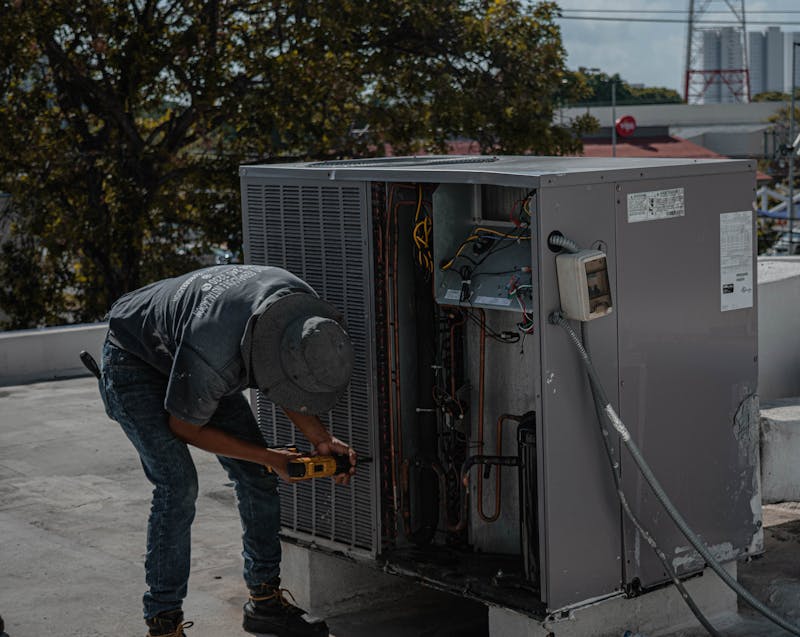
The useful 2026 HVAC cost is not a national average; it is the total of a complete, local, written scope. Two bids with the same tonnage or brand can differ because one includes duct repairs, electrical work, controls, permits, and commissioning while another leaves those items unstated.
This guide replaces unsupported price bands with a quote-normalization process. Give each bidder the same project information, require the same line items, and compare cash and financing totals only after the scope matches.
Define the project before requesting a price
Record these inputs for every contractor:
- Address, climate, utility, and applicable code jurisdiction
- Existing outdoor, indoor, furnace, thermostat, and accessory models
- Fuel, refrigerant, electrical service, and backup-heat arrangement
- Comfort, humidity, noise, airflow, or room-to-room problems
- Planned insulation, window, air-sealing, or addition work
- Access constraints in attics, crawlspaces, roofs, closets, and yards
- Whether this is planned replacement or an emergency no-cooling/no-heat job
Do not prescribe tonnage from square footage. Ask bidders to explain the Manual J load, Manual S selection, and Manual D implications for the house and proposed work.
HVAC quote normalization worksheet
Use the same rows for every proposal. Mark each item included, excluded, allowance, owner-provided, or not stated.
| Quote item | Bid A | Bid B | Bid C |
|---|---|---|---|
| Outdoor, indoor, furnace, control, and accessory model numbers | _____ | _____ | _____ |
| Current AHRI certificate and certified ratings | _____ | _____ | _____ |
| Manual J inputs/results and Manual S selection | _____ | _____ | _____ |
| Duct inspection, leakage, static pressure, airflow, and corrections | _____ | _____ | _____ |
| Electrical circuit, disconnect, breaker, wiring, and service upgrades | _____ | _____ | _____ |
| Line-set reuse/replacement criteria, size, route, and length | _____ | _____ | _____ |
| Refrigerant, recovery, evacuation, charge, mitigation, and testing | _____ | _____ | _____ |
| Condensate drain, trap, pump, overflow protection, and termination | _____ | _____ | _____ |
| Thermostat, communicating control, zoning, sensors, and setup | _____ | _____ | _____ |
| Filtration, ventilation, humidification, dehumidification, or IAQ accessories | _____ | _____ | _____ |
| Pads, stands, snow legs, vibration control, guards, and weather work | _____ | _____ | _____ |
| Gas piping, venting, combustion air, drainage, and startup where applicable | _____ | _____ | _____ |
| Permit, inspection, code corrections, and fees | _____ | _____ | _____ |
| Removal, disposal, patching, cleanup, and property protection | _____ | _____ | _____ |
| Startup procedure and recorded commissioning deliverables | _____ | _____ | _____ |
| Manufacturer warranty, registration, labor coverage, and claim route | _____ | _____ | _____ |
| Cash total, taxes, deposit, payment milestones, and expiration | _____ | _____ | _____ |
| Financing amount, APR, term, fees, and total of payments | _____ | _____ | _____ |
| Incentives, recipient, eligibility, preapproval, and timing | _____ | _____ | _____ |
| Allowances, exclusions, unit prices, and change-order rules | _____ | _____ | _____ |
The interactive HVAC replacement quote-comparison tool provides a printable version and decision record.
Exact matched equipment comes before brand or tier
A proposal should list the complete outdoor and indoor system, furnace when used, and controls. Verify the combination in the AHRI Directory rather than applying an outdoor unit’s maximum efficiency to every installation.
The certificate helps compare rated capacity and efficiency, but it does not prove correct sizing or installation. Use the same load assumptions and design requirements for each bidder.
If you are choosing among major premium brands, the Carrier, Trane, and Lennox guide shows how to compare current equipment without treating a logo as a reliability or price guarantee.
Scope items that commonly change the total
Load, capacity, and ductwork
A replacement is not automatically “same size as before.” Envelope changes, prior oversizing, duct limitations, or comfort complaints can change the selection. Request the design conditions, load results, selected capacity, and explanation for any difference.
Duct work can range from sealing accessible joints to redesigning returns or replacing damaged sections. Require measured findings, defined repairs, insulation, sealing method, register work, access, and post-work verification. “Duct modifications as needed” is not a priceable scope.
Electrical and controls
Record required breaker and conductor sizes, disconnect, service capacity, auxiliary heat, surge protection, low-voltage wiring, and permit responsibilities. A heat-pump conversion or high-capacity backup heat may require work beyond the equipment swap.
Premium variable-capacity features may depend on a communicating thermostat, compatible indoor equipment, sensors, and dealer setup. Confirm what is included and what happens if a proprietary control later needs replacement.
Refrigerant and line set
The quote should name the refrigerant and address the existing line set. Reuse is not automatically wrong, and replacement is not automatically required; the manufacturer instructions, sizes, condition, route, contamination risk, and code control the decision.
For R-32 or R-454B equipment, require compatible components, procedures, and any mandated mitigation features. Review the current refrigerant comparison before approving an allowance that merely says “new refrigerant.”
Access, permits, and restoration
Attic platforms, roof cranes, crawlspace access, wall openings, landscaping, concrete pads, snow stands, condensate routing, and code upgrades add real work. Identify what the contractor restores and what remains for another trade.
The quote should name the permitting party, included fee or allowance, required inspections, and correction responsibility. A permit price without the jurisdiction and scope cannot be compared.
Commissioning and closeout
“Startup included” is vague. Ask which readings and checks will be recorded for the exact system: airflow or static pressure, temperature change, refrigerant procedure, electrical readings, control operation, condensate, safeties, combustion where applicable, and homeowner orientation.
Request the final model/serial list, AHRI certificate, permit closeout, commissioning record, manuals, registration confirmation, and warranty certificates before the final payment milestone.
Compare warranty cost exposure
Parts coverage is not the whole repair bill. Use the HVAC warranty verification worksheet to compare:
- Base, registered, and selected coverage
- Installer workmanship and labor terms
- Refrigerant, diagnosis, shipping, and service-call charges
- Maintenance or authorized-service conditions
- Transfer and claim procedures
- Optional service-contract price and exclusions
If a required maintenance plan is part of the offer, add its full obligation. The maintenance-agreement worksheet helps compare tasks, materials, fees, and renewal rules.
Calculate cash and financing totals separately
For each bid, calculate:
Comparable cash total = base contract + selected options + taxes and mandatory fees + realistic allowances + known excluded work − confirmed incentives paid to you
For financing, record the amount financed, APR, term, payment, origination or dealer fees, prepayment terms, and total of payments. A low monthly payment does not show the project cost.
Do not subtract an incentive until you verify the administrator, eligible equipment match, application step, funding status, deadline, tax treatment where relevant, and recipient. If an amount is uncertain, show it separately instead of presenting it as guaranteed net cost.
Federal tax treatment changed for 2026
Current IRS guidance states that the Section 25C energy efficient home improvement credit is not allowed for property placed in service after December 31, 2025. A 2026 HVAC or thermostat installation should not be priced as though that federal credit applies.
Other programs may remain available. Use the HVAC tax credit and rebate guide to check state, utility, local, and manufacturer offers, then confirm current terms with the responsible administrator. Consult a qualified tax professional about your situation.
Evaluate the contractor from evidence
No single badge guarantees quality. Verify the contractor’s current license where required, insurance, permits, manufacturer authorization when relevant to the equipment or program, and references for similar installations.
Ask who will actually perform the work, what supervision applies, and what commissioning record you receive. Technician certifications can support competence, but they do not replace a complete design, a defined scope, or measured closeout.
Red flags include:
- No site assessment or explanation of capacity
- Missing indoor equipment or control model numbers
- A family-level efficiency claim with no AHRI match
- Large allowances with no unit price or approval rule
- “Ductwork included” with no findings or defined work
- No permit discussion where one is required
- Incentives shown as guaranteed without current program evidence
- A verbal labor promise absent from the contract
- Pressure to sign before receiving the complete scope
Select the best-defined value
Resolve every not stated item and make bidders price the same required work. Then compare comfort objectives, serviceability, warranty exposure, cash total, finance total, schedule, and contractor evidence.
The lowest complete bid may be the right choice. A higher bid may also be justified by documented duct correction, electrical work, better controls, longer supported labor coverage, or stronger commissioning. The worksheet makes that difference visible without pretending one national range can price every home.
Sources and image credit
Plan the full HVAC replacement path
Use these related guides to compare system choices, prepare the house, and understand incentives before you request bids.
- Choosing the right HVAC system
Compare replacement system types before narrowing quotes by brand and capacity.
- Prepare for installation day
Check access, schedules, pets, and work areas before the crew arrives.
- HVAC tax credits and rebates
Review efficiency-program questions to ask before signing a replacement contract.
- Variable-speed HVAC value
Decide whether the comfort and efficiency upgrade is worth the added cost.
- Mini split installation costs
Compare ductless costs when one room, an addition, or zoning is the main issue.
- HVAC maintenance log
Print the worksheet to track symptoms, filter changes, and service history before quotes.

ThermalTechPro Editorial Team
Independent trade-focused editorial team