Oil Furnace vs. Propane Furnace: Which Is Better for Off-Grid Heating?
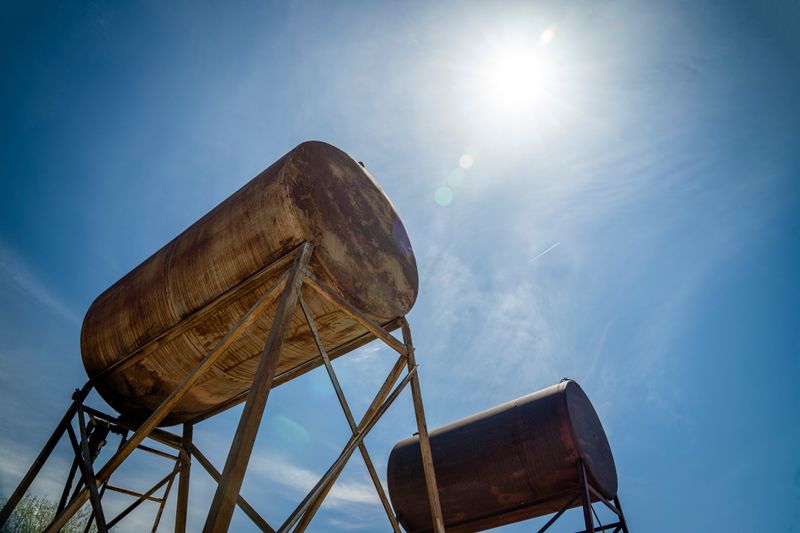
Millions of American homes are not connected to a natural gas pipeline. For these homeowners — typically in rural areas or regions without gas infrastructure — heating options are limited to electricity, oil, or propane. For those who want the comfort and familiarity of a forced-air furnace, that choice often comes down to oil versus propane.
Both fuels have legitimate advantages and real drawbacks. This guide helps you understand the full picture so you can choose the right system for your situation.
How Each System Works
Oil Furnaces
An oil furnace stores heating oil — similar to diesel fuel — in an on-site tank, typically a 275-gallon or 500-gallon above-ground or underground tank. An oil burner atomizes the fuel and ignites it, creating a flame that heats a heat exchanger. The heated air is then distributed through ductwork.
Oil furnaces can achieve AFUE ratings up to 86.6% for standard units, and some high-efficiency condensing oil furnaces reach 90%+. However, high-efficiency oil furnaces are less common and more expensive than their gas counterparts.
Propane Furnaces
Propane furnaces work identically to natural gas furnaces — because propane is a gas, it burns in the same way. In fact, many gas furnaces can be converted between natural gas and propane operation with a conversion kit. Propane is stored on-site in tanks ranging from 100-gallon cylinders to 1,000-gallon underground tanks.
Propane furnaces achieve AFUE ratings up to 98.5%, identical to the best natural gas furnaces. High-efficiency propane furnaces are widely available and cost no more than equivalent natural gas models.
Fuel Cost Comparison
Fuel prices are the most important factor in long-term operating costs, and they vary significantly by region and market conditions.
Heating Value
- Heating oil: approximately 138,500 BTU per gallon
- Propane: approximately 91,500 BTU per gallon
Propane has about 66% of the heating value of oil per gallon, so you need more propane gallons to produce the same heat.
Typical Price Ranges (2026)
| Fuel | Average U.S. Price | Regional Range |
|---|---|---|
| Heating oil | $3.50–$5.50/gallon | $2.80–$7.00/gallon |
| Propane | $2.50–$4.50/gallon | $1.80–$6.00/gallon |
To compare apples to apples, we need to calculate cost per million BTU of delivered heat at representative efficiency levels:
- Oil at $4.00/gallon, 85% AFUE: $34.05 per million BTU
- Propane at $3.50/gallon, 96% AFUE: $39.76 per million BTU
In many markets, heating oil currently provides slightly more BTU per dollar spent than propane when accounting for furnace efficiency. However, propane’s lead in achievable efficiency (98.5% vs. ~87% for oil) helps close that gap in cold climates with high heating loads.
The comparison shifts depending on local prices. In New England, where heating oil competition is intense and delivery infrastructure is well-established, oil can be very competitive. In rural areas of the South and Mountain West where propane delivery is well-organized, propane may win.
The critical point: fuel prices are volatile. Check current prices from multiple suppliers in your specific area, not national averages.
Tank Requirements
Oil Tanks
A standard 275-gallon above-ground oil tank fits in most basements or equipment rooms. Above-ground outdoor tanks are also used. Underground tanks are less common for residential use due to environmental liability concerns — a leaking underground oil tank is an expensive remediation problem.
Oil tank considerations:
- Standard 275-gallon tank costs $800–$1,500 installed
- Tanks have a typical lifespan of 20–30 years
- Older tanks may need inspection or replacement at time of furnace upgrade
- Some insurance companies charge higher premiums for older underground oil tanks
Propane Tanks
Propane tanks are available in a wide range of sizes. A 500-gallon tank is typical for whole-home heating. Propane suppliers often own the tank and lease it to customers — check whether your supplier owns the tank or whether you purchase it outright.
Propane tank considerations:
- 500-gallon tank installation costs $400–$1,000 (if you buy outright)
- Tanks leased from suppliers may restrict which supplier you can use (price shopping is limited)
- Underground propane tanks are safe and common (propane dissipates if it leaks, unlike oil)
- Rural installation may require access for a delivery truck
Delivery and Supply Logistics
Oil Delivery
Heating oil delivery is well-established in the Northeast and Mid-Atlantic regions, with competitive markets in most areas. Options include:
- Budget plans: Pay a fixed monthly amount year-round to smooth out seasonal spikes
- Price cap plans: Lock in a maximum price for the season
- Automatic delivery: Supplier monitors your usage and delivers proactively
Propane Delivery
Propane delivery is available throughout the United States and is the go-to fuel for rural areas outside the Northeast. Most propane suppliers offer automatic delivery and budget plans similar to oil.
One key difference: if you lease your propane tank from your supplier, you are typically locked in to that supplier. Owning your own tank gives you freedom to shop for the best price among multiple distributors.
Furnace Options and Efficiency
This is where propane has a clear advantage. Because propane furnaces are mechanically identical to natural gas furnaces, homeowners have access to the full range of modern furnace technology:
- Variable-speed ECM blower motors
- Two-stage and modulating gas valves
- AFUE ratings up to 98.5%
- Smart thermostat compatibility
- Condensing technology with PVC venting
Oil furnaces, while reliable, are limited by the combustion technology required for liquid fuel. The highest AFUE oil furnaces top out around 86–87% for standard models. Condensing oil furnaces (which recover heat from flue gases) can reach 90%, but they are expensive and require specialized installation.
Bottom line: Propane furnaces can achieve substantially higher efficiency than oil furnaces, which matters in cold climates where heating loads are large.
Environmental Considerations
Both oil and propane are fossil fuels with carbon emissions. However:
- Propane produces about 12% less CO₂ per BTU than oil
- Modern propane furnaces at 96% AFUE emit less CO₂ per unit of heat than oil furnaces at 85% AFUE
- Oil combustion produces particulate matter and sulfur compounds not present with propane
If environmental impact is a consideration, propane is the cleaner of the two fuels.
Switching From Oil to Propane
Homeowners with oil systems can switch to propane, but the process involves:
- Removing or decommissioning the oil tank (cost: $500–$2,000)
- Installing a propane tank
- Installing a propane-compatible furnace (or converting an oil furnace, though this is generally not recommended — new equipment is usually better)
The full switch cost can be $5,000–$10,000 when accounting for equipment and tank work. However, if your oil furnace is nearing end of life, switching to propane at replacement time adds relatively modest incremental cost.
The Heat Pump Option
Worth mentioning: for homeowners considering oil or propane to replace an aging system, a cold-climate air-source heat pump is increasingly competitive. Modern cold-climate heat pumps (Mitsubishi, Bosch, Daikin) maintain efficient operation below 0°F and can significantly reduce heating costs compared to both oil and propane in most climates — while also providing cooling in summer.
Federal tax credits of up to $2,000 per year are available for qualifying heat pump installations under the Inflation Reduction Act, making the economics of electrification more favorable than ever.
Which Should You Choose?
Choose an oil furnace if:
- You live in the Northeast where oil infrastructure is well-established and prices are competitive
- Your existing oil infrastructure (tank, burner) is in good condition and can be reused
- Local oil prices are consistently lower than propane on a BTU-equivalent basis
Choose a propane furnace if:
- You want access to the highest efficiency furnace technology (up to 98.5% AFUE)
- You live outside the Northeast where propane distribution is strong
- You want a cleaner-burning fuel with lower emissions
- You own your own tank and can shop multiple suppliers for competitive pricing
In either case, installing a carbon monoxide detector is essential. The Kidde 900-0076-01 Carbon Monoxide Detector is a reliable, battery-powered detector suitable for placement near your furnace and in bedrooms on every level.

ThermalTechPro Editorial Team
Independent trade-focused editorial team