R-32 vs. R-410A vs. R-454B: The New Refrigerant Landscape
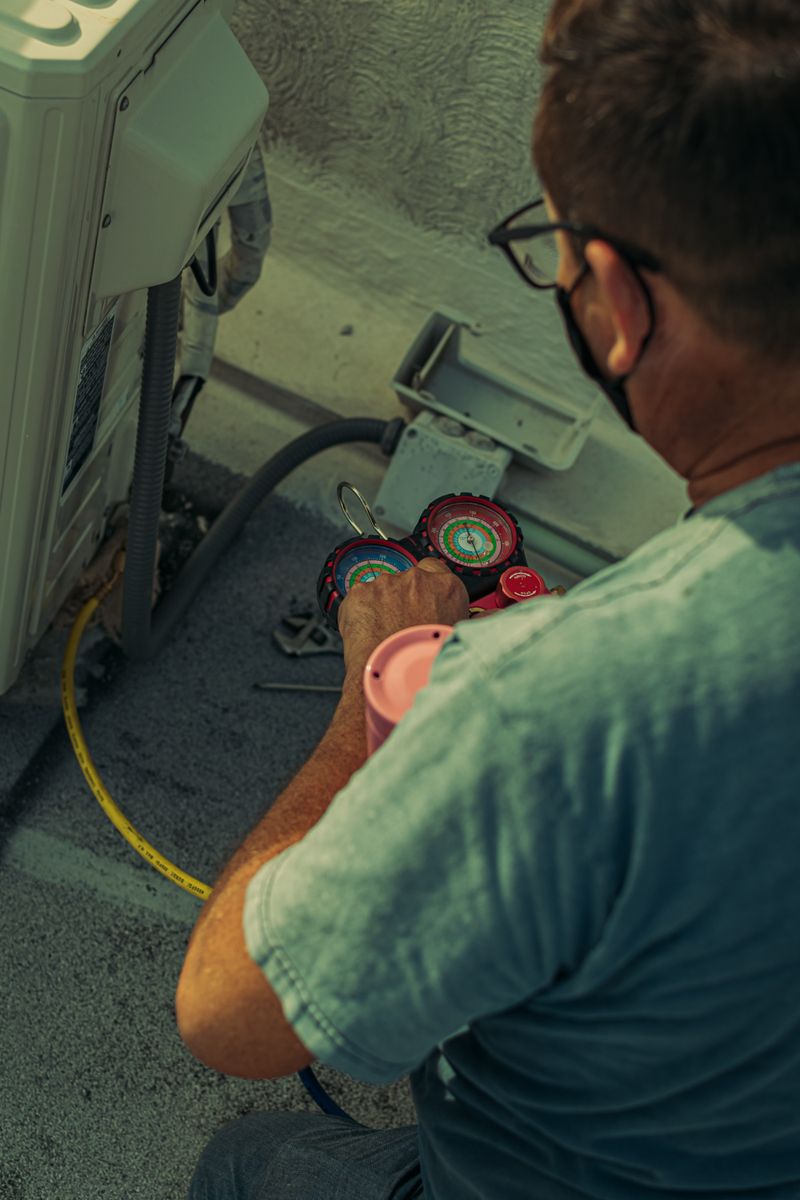
If you have been paying attention to HVAC news in recent years, you have likely heard that refrigerants are changing — again. After the transition from R-22 (Freon) to R-410A in the 2010s, the industry is now midway through another transition driven by environmental regulations. R-32 and R-454B are the two leading replacements for R-410A, and each has implications for homeowners, technicians, and anyone buying new equipment.
This guide explains the current refrigerant landscape in plain terms — what you need to know as a homeowner, and what it means for future equipment and service costs.
Why Refrigerants Are Changing
Refrigerants are being regulated based on their Global Warming Potential (GWP) — a measure of how much a gas contributes to climate warming relative to CO₂ over 100 years. Higher GWP means worse climate impact when the refrigerant is released.
The EPA’s AIM Act (American Innovation and Manufacturing Act), enacted in 2020, mandates a phasedown of hydrofluorocarbons (HFCs) — a family of refrigerants that includes R-410A — by 85% by 2036, based on their GWP.
R-410A has a GWP of 2,088. The next generation of refrigerants targets GWP below 750, and ideally below 150.
R-410A: The Outgoing Standard
R-410A became the dominant residential HVAC refrigerant in the United States after R-22 was phased out. It replaced R-22 effectively in terms of efficiency and performance, and the industry standardized on it for nearly two decades.
Key properties:
- GWP: 2,088
- Non-flammable (A1 safety classification)
- Excellent efficiency and heat transfer properties
- Operating pressure: high (400–600 PSI)
Status: New residential HVAC systems using R-410A were no longer allowed to be manufactured in the U.S. after January 1, 2025. Existing systems can continue to be serviced with R-410A, and the refrigerant remains available for service purposes — but at rising prices as supply transitions.
What this means for R-410A system owners: You can continue to use and service your existing system. R-410A is still available for recharging. However, prices for R-410A have been rising and will likely continue to do so as supply declines. If your system has a refrigerant leak, fixing the leak promptly is more important than ever.
R-454B: Carrier’s Choice and Industry Direction
R-454B (marketed by Chemours as Opteon XL41) is the refrigerant that Carrier has adopted as the primary replacement for R-410A in its residential systems. Several other manufacturers have also adopted R-454B.
Key properties:
- GWP: 466 (77% lower than R-410A)
- Mildly flammable (A2L safety classification — “lower flammability”)
- Operating pressure: similar to R-410A
- Very similar thermodynamic properties to R-410A
A2L Classification: R-454B is classified as A2L — “lower flammability” — meaning it can ignite under certain conditions but has a very high ignition temperature and low flame propagation velocity. In practical terms, A2L refrigerants require updated installer training and equipment handling procedures, but do not represent a significant hazard in properly installed and maintained systems.
Technicians should use an equipment-specific A2L refrigerant service safety checklist covering identification, compatible tools, ignition control, recovery, mitigation features, and closeout documentation.
New equipment designed for R-454B uses leak detection sensors and uses A2L-rated components. Buildings where A2L refrigerants are installed may have additional ventilation requirements in mechanical rooms — primarily relevant for commercial rather than residential installations.
Status: R-454B is the refrigerant used in new Carrier, Bryant, and some Lennox residential systems as of 2025. It is not compatible with existing R-410A equipment. If your existing system is charged with R-410A and needs service, it still uses R-410A — R-454B is only for new equipment designed for it.
R-32: The Single-Component Alternative
R-32 is a pure single-compound refrigerant (unlike R-410A and R-454B, which are blends of multiple refrigerants). It is widely used in residential HVAC in Europe, Japan, and Australia and has been adopted by Daikin globally, making it the refrigerant of choice for Daikin’s equipment and its subsidiary brands.
Key properties:
- GWP: 675 (68% lower than R-410A)
- Mildly flammable (A2L classification)
- Higher operating pressure than R-410A (requires slightly different handling)
- Excellent efficiency — R-32 systems can achieve higher SEER2 ratings than equivalent R-410A systems
- Easier to handle than blends (single component means simpler recovery and recycling)
Status: R-32 is used in Daikin, Goodman, Amana, and some Mitsubishi residential mini-splits and central systems as of 2025. Daikin has committed to R-32 globally and has the deepest experience with the refrigerant of any manufacturer.
R-410A vs. R-454B vs. R-32: Head-to-Head
| Property | R-410A | R-454B | R-32 |
|---|---|---|---|
| GWP | 2,088 | 466 | 675 |
| Flammability | A1 (none) | A2L (lower) | A2L (lower) |
| Efficiency | Baseline | Comparable | Slightly better |
| Compatibility | Existing systems | New equipment only | New equipment only |
| Operating pressure | High | Similar to R-410A | Higher than R-410A |
| Recovery/recycling | Standard | Standard | Simpler (single component) |
What This Means for Homeowners
If you own a system with R-410A: Your system is fine. Continue to have it maintained annually. If it has a refrigerant leak, repair it — do not simply top it off repeatedly. As R-410A prices rise, fixing leaks quickly avoids increasingly expensive refrigerant costs.
If you are buying a new system: Record the refrigerant specified for the exact equipment and require compatible indoor and outdoor components, line-set work, mitigation features, controls, tools, and commissioning procedures. Use the Carrier, Trane, and Lennox comparison for current brand examples, then place the refrigerant scope in the HVAC installation cost worksheet before comparing totals.
If your system is older and using R-22: If you are still running an old R-22 system (Freon), you are paying very high prices for refrigerant servicing. R-22 is largely unavailable as new production stopped in 2020. Replacement with a modern R-454B or R-32 system is strongly advisable.
Refrigerant Leak Detection
With A2L refrigerants now in new equipment, the importance of leak detection has increased — both for safety (A2L can be flammable in large concentrations in enclosed spaces) and for protecting your system and the environment.
Consider a refrigerant leak detector for HVAC mechanical rooms or equipment closets. The INFICON D-TEK Select Refrigerant Leak Detector is a professional-grade detector used by HVAC technicians, compatible with a wide range of refrigerants including A2L types.
Looking Ahead
The refrigerant transition will continue through the late 2020s and into the 2030s. R-454B and R-32 are intermediate steps — their GWP values (466 and 675 respectively) are significantly better than R-410A but still above the long-term targets of some regulatory frameworks.
The HVAC industry is also exploring refrigerants with even lower GWP, including CO₂ (R-744, GWP = 1) for commercial applications, and propane-based systems (GWP = 3) for small residential units. These will likely become more common in the next decade.
For now, homeowners can be confident that new systems using R-454B or R-32 represent a genuine improvement in environmental performance while maintaining the reliability and efficiency that modern HVAC requires.

ThermalTechPro Editorial Team
Independent trade-focused editorial team