Can Solar Panels Run Air Conditioning? Options and Sizing
Quick answer
Yes, solar panels can support air conditioning, but the right design depends on the cooling load, location, operating schedule, and need for backup power. Most grid-connected homes pair standard high-efficiency HVAC with whole-home PV; dedicated DC or hybrid systems are more specialized off-grid options.
Common questions
- Can solar panels run a home air conditioner?
- Yes. In a grid-connected home, solar generation and the grid can serve the home's electrical panel while a standard air conditioner operates normally. Running cooling without the grid requires compatible controls and enough solar, usable battery energy, continuous output, and startup capability for the actual load.
- How many solar panels are needed to run an air conditioner?
- There is no reliable panel count based only on AC tonnage. Use measured cooling energy, equipment input power, local solar production, panel ratings, site constraints, and system-loss assumptions to develop a location-specific design.
- Will a grid-tied solar system run AC during an outage?
- A standard grid-tied system normally shuts down when the grid fails. Outage cooling requires equipment specifically designed to operate safely when isolated from the grid, plus sufficient solar or storage and an approved protected-load or backup configuration.
- Does solar air conditioning require a battery?
- Not when the grid supports the home. A battery becomes relevant when cooling must continue without grid power after solar output falls, but its usable energy and power ratings must be matched to the required loads and duration.
Source note: Reviewed September 15, 2026 using current IRS, U.S. Department of Energy, NLR PVWatts, and ENERGY STAR guidance. This is a source-based planning guide, not hands-on product testing, a site design, or tax advice.
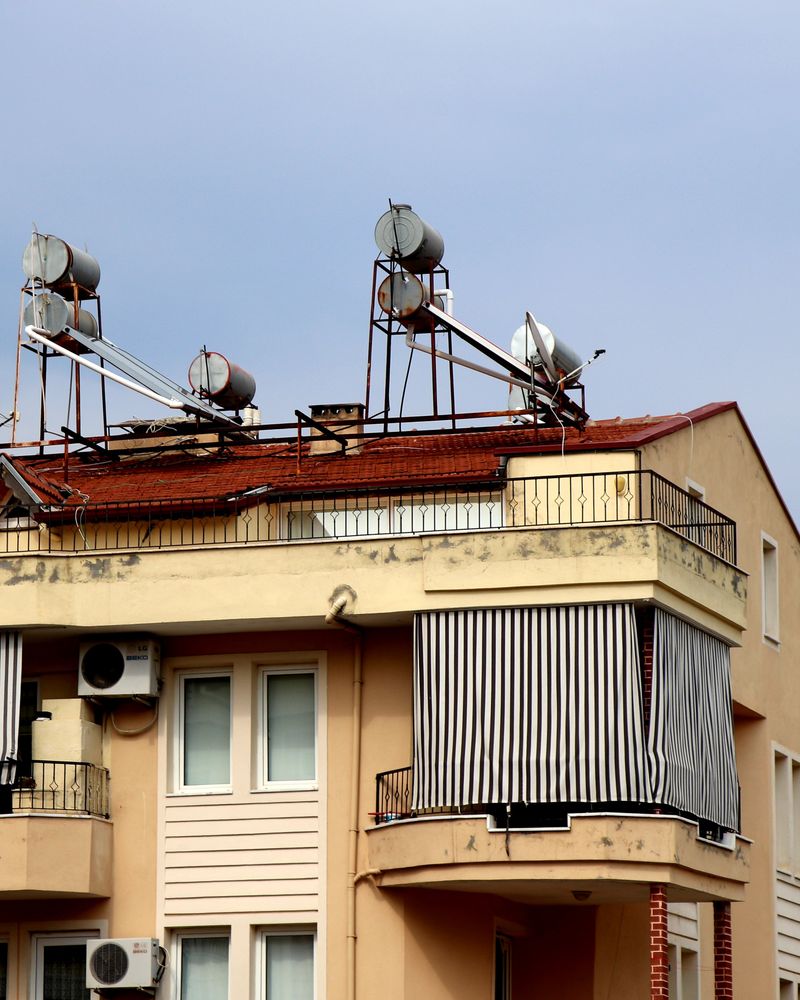
Solar panels can run air conditioning, but “How many panels do I need?” is not the first question. Start by deciding whether you want to offset electricity bills, cool through an outage, or operate where no grid is available. Each goal leads to a different system.
For most grid-connected homes, the practical arrangement is a correctly sized, high-efficiency air conditioner or heat pump on the normal electrical system, paired with a site-specific PV array that offsets some or all household electricity over time. A dedicated DC or hybrid solar mini-split is mainly worth evaluating for an off-grid or constrained site. Batteries are necessary only when cooling must continue without grid support after solar output becomes insufficient.
Choose the solar AC arrangement first
| Arrangement | Best fit | Night and outage behavior | Verify before accepting a quote |
|---|---|---|---|
| Grid-tied PV plus standard HVAC | Most grid-connected homes | Grid serves shortfalls; ordinary grid-tied solar normally shuts down in an outage | Cooling kWh, utility tariff and export rules, roof or ground-mount limits, PV production, and HVAC efficiency |
| Expand existing PV | A home adding or replacing cooling | Depends on the existing inverter and any backup system | Interval data, spare inverter and service capacity, warranty, array compatibility, and interconnection limits |
| Solar plus battery | A home that needs selected loads during outages or after sunset | Can support approved protected loads within the battery and inverter limits | Required duration, usable kWh, continuous kW, surge capability, reserve setting, and recharge conditions |
| Dedicated DC or hybrid mini-split | A cabin, workshop, addition, or constrained remote site | Operation varies by product, solar input, grid connection, and optional storage | Exact wiring architecture, operating envelope, listed equipment, local service, parts, controls, and warranty |
| Fully off-grid cooling | A site with no practical utility connection | Must cover poor-sun periods with storage, another energy source, load shedding, or some combination | Worst-case weather, seasonal load, autonomy target, generator strategy, redundancy, and service access |
A standard PV array does not send a fixed set of panels directly to a conventional central AC. Solar output changes throughout the day, and a grid-connected home balances generation and consumption through its electrical system. Export compensation, time-of-use pricing, system-size limits, and permission-to-operate rules are utility-specific—not universal “net metering” assumptions.
Keep kWh, kW, usable energy, and surge separate
These measurements answer different design questions:
- Kilowatt-hours (kWh) measure energy over time. Annual and seasonal cooling kWh help estimate how much PV production could offset consumption.
- Kilowatts (kW) measure power at an instant. The inverter, electrical service, and backup system must support simultaneous operating loads.
- Usable battery kWh is the energy available within the permitted state-of-charge window, not necessarily the headline battery capacity.
- Continuous battery/inverter kW is how much power the system can sustain.
- Surge or startup capability is the brief higher-output requirement when equipment starts. Use the exact HVAC and inverter documentation; do not infer it from battery capacity.
Variable-speed equipment may ramp rather than start at full output, but its actual minimum, rated, and maximum input still matter. Ask for the manufacturer’s electrical data and the proposed system’s compatibility documentation.
Solar sizing worksheet for air conditioning
The U.S. Department of Energy recommends starting a residential solar assessment with previous bills, annual and seasonal electricity needs, future changes, and the site itself. Use this worksheet to give HVAC and solar bidders the same inputs.
| Input | What to collect | Why it matters |
|---|---|---|
| 12 months of use | Utility bills plus hourly or 15-minute interval data when available | Separates annual energy from summer peaks and shows when electricity is used |
| Cooling load and schedule | Cooling-season kWh, thermostat schedule, runtime or submeter data, and occupied hours | Avoids sizing from nameplate tonnage alone |
| HVAC selection | Manual J load calculation, proposed capacity, efficiency ratings, and equipment input-power range | Matches equipment to the building before matching energy supply |
| Future loads | Planned heat pump, water heating, EV charging, addition, or occupancy changes | Prevents a design based only on last year’s demand |
| Solar production | Monthly and, when useful, hourly output from NLR PVWatts using the location, array size, tilt, azimuth, and losses | Replaces universal sun-hour and panel-count estimates |
| Site constraints | Roof age, structural condition, usable area, orientation, shade, setbacks, and ground-mount options | Determines whether the modeled array can actually be installed |
| Utility rules | Tariff, export credit, time-of-use periods, size limits, interconnection process, and outage restrictions | Determines how grid imports and exports are treated |
| Loss assumptions | Soiling, shading, wiring, inverter efficiency, temperature, degradation, and availability | Makes competing production estimates comparable |
For a first-pass annual estimate, divide the additional cooling energy you want to offset by PVWatts’ modeled annual production per kW at the site. Treat the result as a starting capacity, not a final design. Compare monthly or hourly production with the cooling profile, then have the installer document constraints and losses. PVWatts estimates grid-connected production; it does not design an off-grid battery system or guarantee output.
HVAC sizing is a separate step. ENERGY STAR recommends a Manual J load calculation for ductless systems, and the same building-load discipline matters for central equipment. Review how to size an air conditioner before using any proposed AC input in the solar model.
Battery and outage checklist
“One battery” or “four hours of AC” is not a meaningful promise without named inputs. For backup cooling, define the protected cooling zone and acceptable indoor conditions, then document:
- Required cooling duration and the weather conditions used for the estimate.
- Measured or manufacturer-documented load profile, including indoor and outdoor equipment plus pumps, fans, controls, and other protected circuits.
- Usable battery energy, reserve state of charge, conversion losses, and ambient-temperature derating.
- Continuous battery and inverter output against all simultaneous loads.
- Startup or surge requirement and whether a listed soft-start device is permitted by both HVAC and backup-system manufacturers.
- Protected-load panel, transfer equipment, and inverter compatibility, including safe isolation from the utility.
- Low-sun recharge plan, load-shedding priorities, and any generator integration.
- Battery location, clearances, fire and electrical code requirements, warranty conditions, and emergency shutdown instructions.
A grid-tied PV system alone generally cannot power the home when the grid is down because it must stop energizing utility lines. Backup operation needs an approved islanding-capable design. The installer and local authority having jurisdiction must confirm the electrical, fire-code, permit, inspection, and interconnection requirements.
When a dedicated DC or hybrid solar mini-split makes sense
A dedicated solar-ready mini-split may reduce conversion steps and serve a single off-grid room during good solar conditions. It can be attractive where extending utility service or ductwork is difficult.
Do not assume “solar-ready” means all-day or outage-ready. Compare the exact unit’s allowed PV voltage and current range, minimum solar input, AC-grid or battery connection, behavior under clouds, low- and high-temperature performance, controls, and warranty. Also ask who can obtain parts and service the refrigerant circuit locally. Our central AC vs. ductless mini-split guide helps frame the HVAC side of that choice.
Incentives, prices, and payback need current local inputs
As of this review, the IRS says the federal Section 25D Residential Clean Energy Credit is not allowed for expenditures after December 31, 2025. The IRS also states that an installation completed after that date does not qualify merely because it was paid for earlier. The former 30% through-2032 claim and after-credit example have therefore been removed from this guide.
Federal law, state programs, utility rebates, local programs, and tax circumstances can change. Verify eligibility, completion rules, eligible costs, and required paperwork with the responsible agency or program before including an incentive in a quote. Consult a qualified tax professional for advice specific to you.
Do the same for economics. A useful quote should state the equipment and labor scope, modeled production, degradation and loss assumptions, utility tariff and export treatment, financing terms, maintenance, warranty, and excluded work. Calculate savings from your actual rate structure and consumption—never a generic national electricity price or fixed payback range.
Safety and professional scope
Solar AC combines multiple regulated trades. Qualified professionals should handle service-panel and inverter work, rooftop attachment and structural review, battery and transfer equipment, refrigerant work, permits, inspections, and utility interconnection. Follow current manufacturer instructions and requirements from the local authority having jurisdiction. This guide is not a DIY wiring, battery installation, or refrigerant procedure.
Sources and method
This guide was substantively reviewed on September 15, 2026 (Australia/Melbourne). The review compared the earlier claims with current primary guidance; it did not include hands-on product testing.
- IRS: current termination dates and Section 25D installation treatment
- U.S. Department of Energy: step-by-step guide for consumers going solar
- U.S. Department of Energy: Homeowner’s Guide to Solar
- National Laboratory of the Rockies: PVWatts Calculator
- ENERGY STAR: ductless heating and cooling sizing guidance
Related HVAC planning guides
- Compare SEER2, EER2, and other HVAC efficiency ratings before estimating cooling electricity.
- Decide whether a heat pump or air conditioner fits the home’s year-round load.
- Compare central AC and ductless mini-splits before choosing a distribution approach.
- Review air-conditioner sizing and Manual J before accepting replacement tonnage.
- Use smart thermostat compatibility and control guidance to plan schedules without assuming controls fix sizing or power constraints.
Your next step
Gather 12 months of bills and available interval data, define which space must remain cool and for how long during an outage, and obtain at least two itemized HVAC/solar quotes built from the same inputs. Model location-specific production in PVWatts, compare each bidder’s losses and utility assumptions, and confirm permits, interconnection, serviceability, and equipment compatibility before selecting a system.

ThermalTechPro Team
Independent trade-focused editorial team