Whole-House Humidifier vs. Portable Humidifier: Which Is Right for You?
Dry indoor air is one of the most common and underappreciated comfort problems in American homes, particularly in cold climates during winter. When outdoor temperatures drop, cold dry air enters the home and heating systems reduce relative humidity further — often to 10–30% when the comfortable range is 35–50%.
Low humidity causes dry skin, irritated nasal passages, static electricity, cracked wood furniture and flooring, and increased vulnerability to respiratory viruses. The question most homeowners face is whether to address the problem with a whole-house system integrated into their HVAC, or with portable room humidifiers.
Understanding Relative Humidity
Relative humidity (RH) is the amount of moisture in the air as a percentage of the maximum moisture that air at that temperature can hold. Warm air holds more moisture than cold air.
When cold outdoor air enters your home and is heated to 70°F without any moisture being added, its relative humidity drops dramatically. Air at 20°F with 80% RH (common on a cold winter day) heated to 70°F has a relative humidity of only about 12–15%. This is drier than most deserts.
The EPA recommends maintaining indoor relative humidity between 30% and 50% for comfort and health. ASHRAE recommends 35–45% for optimal indoor air quality.
How Whole-House Humidifiers Work
Whole-house humidifiers install directly into your HVAC system and add moisture to the air as it circulates through the furnace and ductwork.
Types of Whole-House Humidifiers
Bypass Humidifiers: The most common and affordable type. A water panel (evaporator pad) sits in a housing connected to both the supply and return ducts. When the furnace runs, some warm air is diverted through the water-saturated panel, picks up moisture, and returns to the air stream. Water drips over the panel continuously when the humidifier is active.
- Pros: Simple, inexpensive ($150–$400 installed), low electricity use
- Cons: Only runs when the furnace is running, slightly less output than powered types
Fan-Powered Humidifiers: Similar to bypass types but include their own fan that moves air through the water panel independently of furnace operation.
- Pros: Can humidify even when the furnace is not actively heating, higher moisture output
- Cons: More complex, higher electricity consumption
Steam Humidifiers: Heat water to create steam that is injected directly into the airstream. The most powerful and controllable type — capable of adding very large amounts of moisture regardless of furnace operation or duct temperature.
- Pros: Maximum control, highest output, works with any HVAC system
- Cons: Most expensive ($400–$1,200 equipment, $300–$600 installed), higher operating costs, requires more maintenance
Whole-House Humidifier Costs
| Type | Equipment | Installation | Annual Operating |
|---|---|---|---|
| Bypass | $150–$300 | $100–$300 | $10–$30/year (water) |
| Fan-powered | $200–$400 | $150–$350 | $30–$80/year |
| Steam | $400–$1,200 | $300–$600 | $100–$300/year |
Installation is typically performed by an HVAC contractor and includes connecting to the water supply, drain, and electrical.
Whole-House Humidifier Maintenance
Bypass and fan-powered humidifiers require annual water panel replacement ($10–$25). The water panel develops mineral scale from hard water and loses effectiveness over time.
Steam humidifiers require more frequent maintenance — electrode cleaning, scale removal, and periodic canister replacement depending on water hardness.
How Portable Humidifiers Work
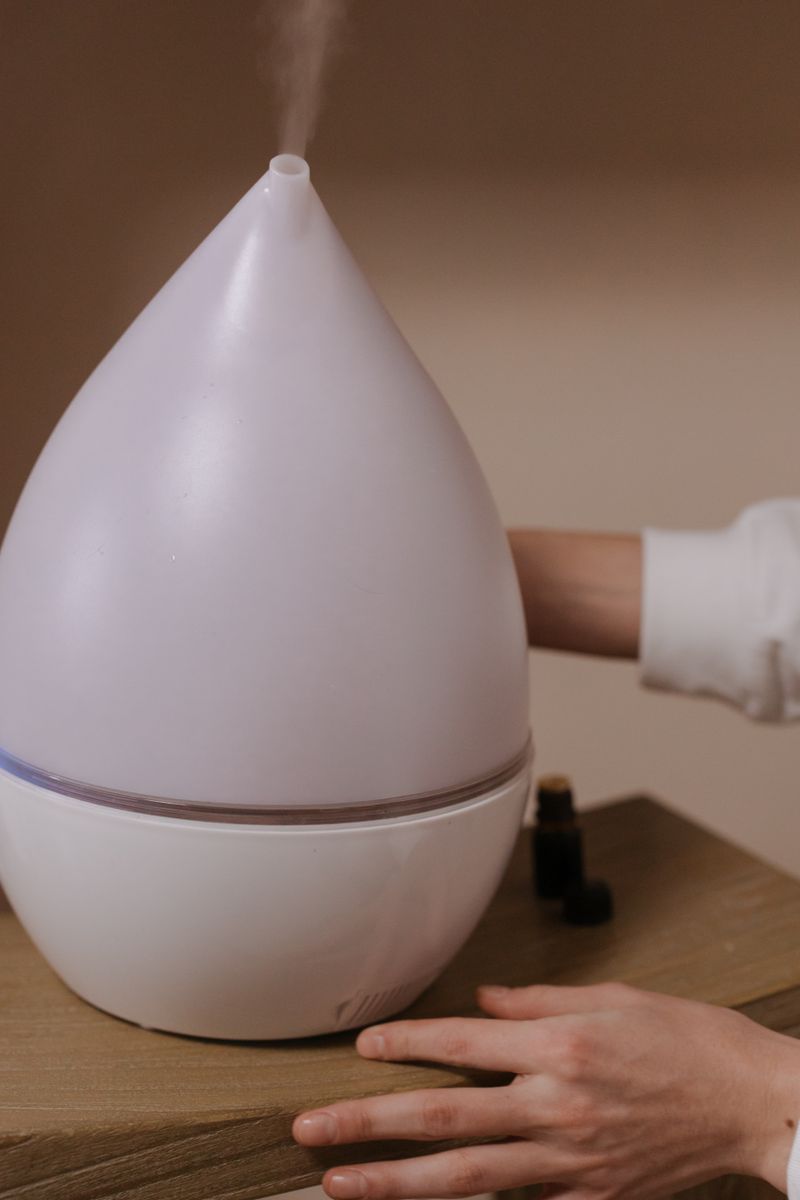
Portable humidifiers are standalone units that add moisture to the air in a single room or area. They require periodic manual refilling from a water reservoir.
Types of Portable Humidifiers
Evaporative (Cool Mist): A fan blows air through a wet filter or wick. Water evaporates naturally into the airstream. This is the most common and energy-efficient type.
Ultrasonic: A vibrating piezoelectric element creates a fine water mist that is blown into the room. Very quiet, energy-efficient, and produces visible mist. However, ultrasonic humidifiers create white dust if used with hard tap water — the dissolved minerals are dispersed as fine particles. Use distilled or demineralized water.
Warm Mist (Steam Vaporizer): Boils water to create steam. Kills bacteria in the water before releasing it as steam. Good for bedrooms of sick individuals. Higher energy consumption, and the hot steam element can be a burn hazard around children.
Portable Humidifier Coverage
Portable humidifiers are rated by room size. Common coverage areas:
| Unit Size | Room Coverage |
|---|---|
| Small (0.5–1 gal tank) | Up to 300 sq ft |
| Medium (1–1.5 gal) | 300–500 sq ft |
| Large (2–3 gal) | 500–800 sq ft |
| Whole-room (3.5+ gal) | 800–1,200 sq ft |
No portable unit is rated for whole-home coverage — you need multiple units for a multi-room home.
Portable Humidifier Costs
- Basic models: $25–$60
- Mid-range: $60–$120
- Premium large-capacity: $120–$250
Operating costs are modest — typically $20–$50 per year in electricity for average use, plus water.
Head-to-Head Comparison
| Factor | Whole-House | Portable |
|---|---|---|
| Coverage | Entire home | One room |
| Upfront cost | $400–$1,800 installed | $25–$250 |
| Ongoing maintenance | Annual (panel replacement) | Weekly (refilling, cleaning) |
| Ease of use | Set-and-forget | Requires daily/weekly attention |
| Humidity control | Precise (humidistat) | Less precise |
| Mineral deposits | Drain system, some on panel | White dust (ultrasonic), deposits in tank |
| Requires HVAC system | Yes (forced air) | No |
| Best for | Whole-home solution | Single-room or supplemental |
The Maintenance Reality
The biggest practical difference between whole-house and portable humidifiers is maintenance burden.
A properly installed whole-house humidifier with annual panel replacement requires almost no day-to-day attention. You set the humidistat and forget about it until the annual maintenance visit.
Portable humidifiers require frequent refilling — in dry winter climates, a large-capacity unit may need refilling daily. They also require weekly cleaning to prevent mold and bacterial growth in the water reservoir and on wicks. Neglected portable humidifiers can actually worsen air quality by dispersing mold spores.
Which Should You Choose?
Choose a whole-house humidifier if:
- You have a forced-air HVAC system (required for integration)
- You want a set-and-forget solution for the entire home
- You are tired of maintaining multiple portable units
- Your home experiences significant static electricity or wood cracking problems in winter
Choose a portable humidifier if:
- You do not have forced-air HVAC (boiler, electric baseboard heat)
- You need humidity only in one or two rooms (baby’s room, bedroom)
- You rent and cannot install permanent equipment
- Budget is the primary concern and you are willing to manage maintenance
Consider both if:
- You have a whole-house humidifier but certain rooms (finished basement, far addition) are not reached adequately by the central system
For a whole-house bypass humidifier, the Aprilaire 600 Whole House Humidifier is one of the most reliable and widely installed units on the market, with a long track record of performance and easy annual panel replacement. For a portable option in a bedroom or nursery, the Levoit LV600HH Hybrid Humidifier offers both warm and cool mist modes with a 6-liter tank and auto humidity sensing.

ThermalTechPro Editorial Team
Independent trade-focused editorial team