Furnace smells like burning? A safety-first guide
Quick answer
A light dusty odor at the first heating cycle after a long idle period can be normal if it fades promptly. Shut the system down and call a qualified technician for a plastic, rubber, electrical, oily, smoky, strong, persistent, or recurring odor. If you see smoke or flame, hear a smoke or carbon-monoxide alarm, or suspect a fuel-gas leak, leave the building and call emergency services or the gas utility from outside.
Common questions
- Is a burning smell normal when the furnace first turns on?
- A light dusty smell can occur on the first heating cycle after a long idle period and should fade promptly. A strong odor, visible smoke, a smell like plastic or wiring, or an odor that persists or returns on later cycles needs a shutdown and professional inspection.
- Should I turn off a furnace that smells like burning?
- Turn it off using the normal control if the odor is electrical, plastic, rubber, oily, smoky, persistent, or recurring and there is no suspected gas leak. If you smell gas, hear hissing, see smoke or flame, or an alarm sounds, leave immediately without operating switches and call from outside.
- Does carbon monoxide smell like something burning?
- No. Carbon monoxide has no odor, color, or taste. A burning smell cannot confirm or rule out CO. Leave immediately if a CO alarm sounds or anyone has possible exposure symptoms, and call emergency services from outside.
Source note: Reviewed September 2026 against current CPSC and NFPA heating-safety guidance, National Grid gas-emergency instructions, Carrier and Trane furnace-odor guidance, and a current Carrier 59SP6 owner manual. Shutdown steps, filters, fault codes, and service procedures are model-specific; use the manual for the exact equipment.
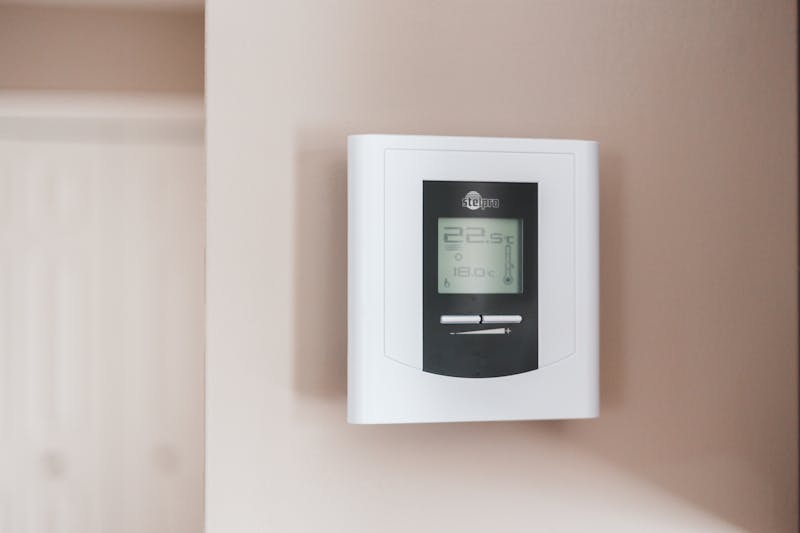
If your furnace smells like burning, timing and odor character matter. A light dusty smell on the first heat cycle after months of inactivity can be ordinary dust heating up. A plastic, rubber, electrical, oily, smoky, strong, persistent, or recurring odor calls for shutdown and service.
Do not wait to identify an odor when there are emergency signs. Leave the building if you see smoke or flame, a smoke or carbon-monoxide alarm sounds, anyone has headache, dizziness, nausea, confusion, or unusual weakness, or you smell sulfur or rotten eggs or hear gas hissing. For a suspected gas leak, do not operate the thermostat, lights, breakers, phones, garage door, or other switches inside. Call 911, the fire department, or the gas utility from a safe location and do not return until responders say it is safe.
Carbon monoxide is odorless. A burning smell cannot prove that CO is present, and the absence of a smell cannot prove that the home is safe. Use working alarms and follow the separate carbon monoxide and HVAC safety guide for CO response.
Furnace burning-smell decision table
| What you notice | Timing and location | Safest next action |
|---|---|---|
| Light, dusty or slightly scorched odor | First heat after a long shutdown; reaches several registers; fades promptly | Monitor from outside the cabinet. If it grows stronger, lasts beyond the initial cycle, or returns later, turn the system off and call for service. |
| Burning plastic, hot wiring, sharp electrical, or rubber odor | Any time; often strongest near the furnace or certain registers | If there is no gas-leak sign, turn the system off with its normal control. Do not reset a tripped breaker or open a compartment. Call an HVAC technician; call 911 if smoke or flame appears. |
| Oily odor, smoke, soot, or fuel smell | Oil furnace, burner startup, or repeated heat calls | Shut the system down without relighting or adjusting it. Keep clear and call a qualified oil-heating technician. Leave and call emergency services if smoke is building. |
| Sulfur, rotten eggs, or hissing | Near any gas appliance, gas piping, or throughout the building | Treat it as a possible gas emergency. Leave without operating switches and call 911 or the gas utility from outside. |
| New-equipment or coating-like odor | Immediately after installation or approved service | Check the exact owner manual and installer instructions. If the odor is strong, persists, returns, or comes with smoke, shut down and call the installer. |
| Dusty smell on every cycle | Not limited to the first seasonal startup | Turn the system off and check only the normal owner-access filter. A technician should investigate airflow, overheating, debris, blower, electrical, or combustion causes. |
| Odor with fan-only operation | Heat source is off, but the blower distributes the smell | The source may be in the blower or air path, or the return may be pulling odor from elsewhere. Stop the fan and arrange an inspection if the source is not obvious and harmless. |
| Odor in one room only | One register, outlet, or nearby appliance is affected | Do not assume the furnace is the source. Check for smoke from a safe distance, leave electrical devices alone if they may be overheating, and call the appropriate professional. |
This is a triage tool, not a diagnosis. Furnaces, heat pumps with auxiliary heat, and oil-fired equipment work differently. Use the exact model’s manual for shutdown and service procedures.
When a first-start burning-dust smell may be normal
Dust can settle on heating surfaces and in the air path while equipment sits unused. Trane and Carrier both describe a temporary dusty odor at the first seasonal startup. Their guidance also draws an important line: the smell should dissipate promptly, while persistent odor, burning plastic, electrical odor, or smoke requires attention.
Use “first start” narrowly. The normal explanation becomes less convincing when any of these are true:
- The furnace has already completed several heat cycles this season.
- The odor becomes stronger instead of fading.
- It smells like melting plastic, rubber, wiring, oil, or smoke rather than dry dust.
- Smoke is visible, an alarm sounds, a breaker trips, or the furnace shuts itself down.
- The odor appears after recent wiring, burner, blower, duct, or remodeling work.
- Only one room smells, or the odor continues when another appliance is operating and the furnace is off.
Keep the equipment assembled. NFPA recommends keeping anything combustible at least three feet from heating equipment and having the equipment inspected annually by a qualified professional.
Seven observations that make the odor easier to diagnose
Record these details without opening combustion or electrical compartments:
- Equipment and fuel: Note gas, propane, oil, electric, or heat-pump equipment. Photograph the model plate only if it is visible without panel removal.
- First start or repeat event: Is this the first post-summer call, the first run after service, or a smell returning on normal cycles?
- Duration and trend: Record when it starts, how long it lasts, and whether it fades, intensifies, or stops with the heat call.
- Affected rooms: Is it strongest at the furnace, every supply register, one register, or near another appliance?
- Other warnings: Report smoke, soot, exposed flame, buzzing, scraping, delayed-ignition noise, a tripped breaker, fault display, or alarm.
- Recent changes: Include filter replacement, service, installation, electrical work, painting, cleaning, pest activity, storage, or renovation dust.
- Heat versus fan-only: Does it occur only with heat, with fan-only mode, or while the HVAC system is off?
Heat-only odor focuses attention on the heating process. Fan-only odor keeps the blower, filter, return, ducts, and non-HVAC sources in consideration. Odor while the system is off may come from another appliance or circuit.
Safe checks homeowners can make
After ruling out smoke, flame, alarms, possible gas, and possible CO exposure, limit checks to ordinary owner tasks:
- Confirm the thermostat mode and note whether the odor follows a heat call.
- Look at the normal owner-access air filter without entering a service compartment. Replace it only with a size and type allowed by the equipment instructions, and never run the system without a filter.
- Check that accessible supply and return grilles are not covered by furniture, rugs, or storage.
- Look around the exterior of the furnace for stored combustibles or an obvious non-HVAC odor source without touching the cabinet or venting.
- Record the fault code before power is interrupted, then use the code table for the exact model rather than a generic chart.
The HVAC filter guide explains filter fit and replacement schedules. The HVAC maintenance checklist covers seasonal observations that can reveal a developing problem before the first cold night.
Do not repeatedly reset a breaker or furnace, bypass a switch, relight or adjust equipment, remove burner or blower doors, touch wiring, or open fuel and combustion components. A safety shutdown is evidence for the technician, not an obstacle to defeat.
What a qualified technician should separate
A useful service visit should identify the source rather than simply deodorize the system. Depending on the equipment and symptom, the technician may need to follow the exact manufacturer procedure to evaluate:
- Filter fit, airflow, blower operation, temperature rise, limits, and signs of overheating
- Motors, capacitors, relays, wiring, terminals, boards, and electric heat elements
- Foreign material or damage in the cabinet, return, supply plenum, or accessible duct path
- Gas or oil burner operation, ignition, combustion air, venting, heat exchanger condition, and measured combustion performance
- Oil leakage, delayed ignition, soot, or burner setup on oil-fired equipment
- Whether another appliance or electrical fault is being drawn into the HVAC return
An ignition fault is a different diagnostic path from an odor complaint. If the burners light and then shut off shortly afterward, the furnace flame sensor symptom guide explains why that sequence does not by itself prove a bad sensor. If inspection finds a major safety defect or repeated high-cost failures, use the furnace replacement warning signs to frame the repair-versus-replacement decision.
Sources and further reading
- U.S. Consumer Product Safety Commission: 2026 home-heating safety guidance
- National Fire Protection Association: Heating safety
- National Grid: Gas emergencies
- Trane: Why does my furnace smell like burning?
- Carrier: Burning smell in the house and furnace odors
- Carrier 59SP6 condensing gas furnace owner’s manual (OM9GFRC-02)
Your next step
If the odor is anything other than a light, fading first-start dust smell, leave the furnace off and contact a qualified HVAC company. Send the company your seven observations, a photo of any exterior fault display, the model number if safely visible, filter age, and recent service history. Ask the technician to document the odor source, safety findings, measurements, repair, and completed post-repair heat cycle before the system returns to service.

ThermalTechPro Team
Independent trade-focused editorial team