DIY vs Professional HVAC Repairs
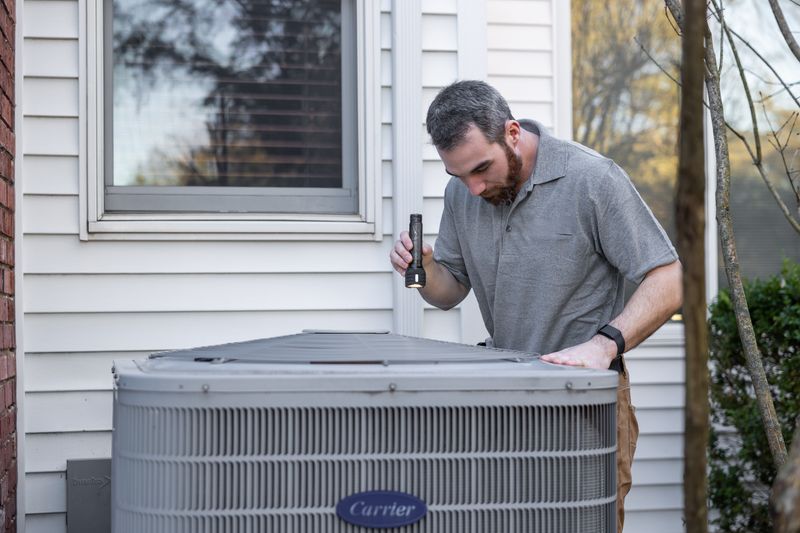
Some HVAC tasks are good homeowner maintenance. Others involve high voltage, refrigerant, gas combustion, carbon monoxide risk, or code requirements. Knowing the difference protects your safety, your equipment warranty, and your budget.
The safest rule is simple: handle cleaning, filters, basic settings, and visual inspections yourself. Bring in a qualified HVAC technician for refrigerant work, combustion problems, electrical component replacement, gas piping, major airflow diagnosis, and any repair that requires opening sealed parts of the system.
Quick decision table
| Task | DIY or professional? | Why |
|---|---|---|
| Replace air filter | DIY | Simple and high value |
| Clear debris around outdoor unit | DIY | Low risk with power off |
| Clean registers and return grilles | DIY | Basic housekeeping and airflow |
| Reset a tripped breaker once | DIY with caution | Repeated trips mean a fault |
| Clear accessible condensate line | DIY/pro | Safe if accessible; call for recurring clogs |
| Replace capacitor or contactor | Professional | High voltage and stored charge |
| Add refrigerant | Professional | EPA certification and leak diagnosis required |
| Repair gas valve or burner | Professional | Combustion and gas safety |
| Inspect cracked heat exchanger | Professional | Carbon monoxide risk |
| Replace compressor | Professional | Refrigerant, electrical, and warranty issues |
Safe DIY HVAC tasks
Replacing air filters
Filter replacement is the most important homeowner task. A dirty filter restricts airflow, increases energy use, and can contribute to frozen coils or furnace overheating.
Steps:
- Turn the system off at the thermostat.
- Note the filter size printed on the old filter.
- Slide the old filter out carefully.
- Insert the new filter with the airflow arrow pointing toward the blower.
- Write the date on the filter frame.
For many homes, a pleated filter in the MERV 8 to MERV 12 range is appropriate. The Filtrete 1500 MPR Smart Air Filter is a common option, but do not choose a filter so restrictive that airflow suffers.
Cleaning the outdoor condenser area
Homeowners can remove leaves, grass clippings, weeds, and loose debris around the outdoor AC or heat pump.
Turn off power at the outdoor disconnect first. Use a garden hose with gentle pressure to rinse loose dirt from the coil. Do not use a pressure washer, and do not remove electrical panels unless you are trained to work safely around line voltage.
Cleaning registers and return grilles
Vacuum dust from supply registers and return grilles. Make sure furniture, rugs, and curtains are not blocking airflow. If a grille is painted shut or heavily loaded with dust, remove and clean it if accessible.
Checking thermostat settings
Before calling for service, verify the thermostat is set to the correct mode, setpoint, and fan setting. Replace batteries if the display is dim or blank. For smart thermostats, check Wi-Fi and schedule settings, but do not rewire the thermostat unless you understand the system wiring.
Clearing simple condensate drain clogs
Some homeowners can clear an accessible AC condensate drain using a wet/dry vacuum at the outdoor drain termination. If the clog returns, the drain pan is rusty, or water is near electrical components, call a professional.
See how to clean AC drain lines for a dedicated guide.
DIY troubleshooting that should stop early
It is reasonable to check:
- Thermostat mode and batteries
- Breaker and disconnect position
- Filter condition
- Blocked vents
- Outdoor unit debris
- Condensate float switch
It is not reasonable to keep resetting a breaker, bypassing safety switches, adding refrigerant, or replacing parts by guesswork. If a breaker trips again after one reset, leave it off and call for service.
Repairs that require a professional
Refrigerant work
Refrigerant is regulated, and technicians need EPA Section 608 certification to handle it. A system that is low on refrigerant likely has a leak. “Topping off” without leak diagnosis wastes money and can damage the compressor.
Professional refrigerant work may include leak detection, recovery, evacuation, weighing in charge, superheat or subcooling checks, and documentation. These are not homeowner tasks.
Capacitors, contactors, and electrical parts
AC condensers and air handlers contain high voltage. Capacitors can hold a dangerous charge even after power is shut off. Replacing electrical parts without testing can also hide the real issue, such as a failing motor drawing excessive current.
Call a pro for buzzing contactors, swollen capacitors, burnt wiring, repeated breaker trips, compressor start problems, or motors that overheat.
Gas furnace and combustion repairs
Gas furnaces involve fuel supply, ignition, flame sensing, venting, and carbon monoxide safety. Burner adjustments, gas valve replacement, heat exchanger inspection, pressure switch diagnosis, and venting repairs should be handled by qualified technicians.
If the burners light and then shut off shortly afterward, use the furnace flame-sensor symptom flow to record the sequence and understand why lost flame proof does not, by itself, prove the sensor failed.
Call immediately if you notice:
- Gas odor
- Soot
- Yellow or rolling flames
- Delayed ignition booms
- Carbon monoxide alarm
- Rusted or disconnected flue pipe
- Persistent burning odor
If you smell gas, leave the home and call the gas utility or emergency services.
Compressor and major component replacement
Compressors, coils, reversing valves, blower motors, and control boards require diagnosis before replacement. These repairs often involve refrigerant handling, electrical testing, manufacturer procedures, and warranty rules.
Replacing a major part without finding the cause can lead to repeat failure.
Cost and risk comparison
| Situation | DIY risk | Better path |
|---|---|---|
| Dirty filter causing weak airflow | Low | Replace filter and monitor |
| AC frozen once after dirty filter | Moderate | Turn off cooling, replace filter, call if it refreezes |
| Breaker trips repeatedly | High | Leave breaker off and call a technician |
| Furnace flame looks yellow | High | Shut down and call for combustion inspection |
| Water dripping from blocked drain | Moderate | Clear if accessible; call if overflow persists |
| Refrigerant line is icy | High | Turn off cooling and schedule service |
How to choose an HVAC technician
Look for:
- Proper state or local licensing where required
- Insurance
- EPA certification for refrigerant work
- Written estimates for larger repairs
- Clear diagnostic notes
- Model and serial number documentation
- Warranty explanation
- Willingness to show failed parts or test readings
Avoid repairs based entirely on guesses. A good technician can explain what failed, what measurement confirms it, and what happens if the repair is delayed.
Protect your warranty
DIY part replacement can void warranties if the manufacturer requires professional service. Newer equipment may also require documented maintenance. Keep invoices, model numbers, serial numbers, and maintenance records.
For equipment under parts warranty, ask whether the contractor will process the warranty claim and whether labor is covered separately. Parts warranties often do not include labor.
Sources and further reading
- EPA: Section 608 technician certification
- ENERGY STAR: Maintenance checklist
- EPA: Carbon monoxide’s impact on indoor air quality
Related articles
- HVAC Maintenance Checklist for Homeowners
- How to Fix Common AC Problems
- Summer AC Preparation Checklist
- Winter HVAC Preparation Checklist
Bottom line
DIY HVAC work should stay in the maintenance lane: filters, cleaning, airflow checks, thermostat settings, and simple drain care. Call a qualified technician for refrigerant, combustion, high-voltage electrical parts, gas equipment, and major component failures. The service call costs less than an unsafe repair or damaged compressor.

ThermalTechPro Editorial Team
Independent trade-focused editorial team