Heat Pump Water Heaters: Complete Buying Guide (2026)
Quick answer
A heat pump water heater is mainly an energy-efficiency and equipment-fit decision: it needs enough surrounding air, a suitable electrical circuit, condensate handling, and a household hot-water profile that can tolerate hybrid recovery. Use this guide to judge the HVAC and efficiency side before a plumber confirms local code and connections.
Common questions
- How is this ThermalTechPro guide different from a plumbing water-heater guide?
- This page focuses on equipment efficiency, ambient-air requirements, heat-pump operating modes, utility incentives, and whole-home electrification fit. A plumbing guide should focus more on shutoffs, drain pans, T&P discharge, pipe connections, code inspections, and installation access.
- Should every electric tank be replaced with a heat pump water heater?
- No. The strongest candidates have adequate room volume, year-round air temperature above the manufacturer's minimum, condensate drainage, compatible electrical service, and enough first-hour capacity for the household.
- Who should verify the installation before purchase?
- Have a qualified plumber or installer verify water connections, clearances, pan and drain requirements, and local permits; use a licensed electrician when circuit capacity or panel work is uncertain.
Source note: Reviewed July 2026 against ENERGY STAR heat-pump-water-heater tax-credit guidance, DOE home-upgrade guidance, and common HVAC/electrification planning constraints. Confirm current incentives, permits, electrical capacity, and plumbing details locally before purchase.
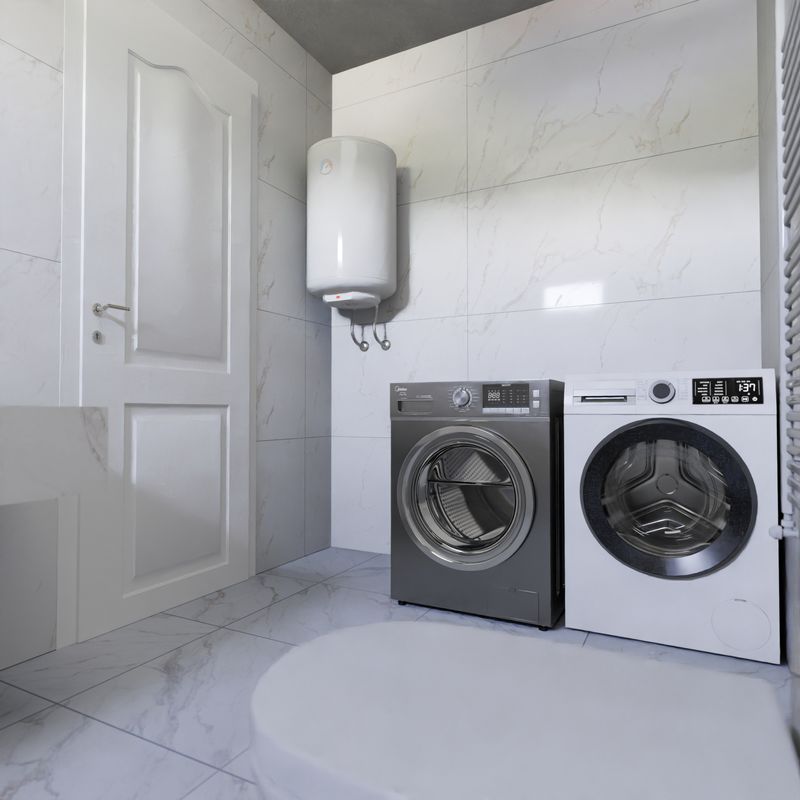
Your water heater runs every single day. Over the course of a year, heating water accounts for roughly 18 percent of a typical home’s total energy bill. If you’re still running a conventional electric resistance tank, you’re paying two to three times more per gallon than you need to.
Heat pump water heaters solve this problem by moving heat rather than creating it. The technology has matured significantly, costs have dropped, and a $300 federal tax credit is currently available through the Inflation Reduction Act. For most homeowners with an electric water heater, switching to a heat pump model is one of the highest-return upgrades you can make.
ThermalTechPro Angle: Equipment Efficiency and Room Fit
This ThermalTechPro guide treats a heat pump water heater as an HVAC-adjacent efficiency upgrade, not just a tank swap. The main questions are whether the unit has enough surrounding air, whether the room can tolerate cooler and drier exhaust air, whether the electrical circuit and operating mode fit the home, and whether incentives change the payback.
Use a plumbing-focused checklist after this equipment screen. The plumber still needs to confirm shutoff valves, supply connections, drain pan requirements, temperature-and-pressure relief discharge, seismic strapping where required, and local permit or inspection rules.
Source check: review current ENERGY STAR heat pump water heater tax credit guidance and DOE home-upgrade guidance before assuming an incentive applies.
How Heat Pump Water Heaters Work
A heat pump water heater works exactly like a refrigerator in reverse. Instead of pulling heat out of a cabinet and dumping it into your kitchen, it pulls heat from the surrounding air and pumps it into a tank of water.
The core components are:
- Compressor — Pressurizes refrigerant to raise its temperature
- Evaporator coil — Absorbs heat from surrounding air
- Condenser coil — Transfers heat into the water tank
- Fan — Draws ambient air across the evaporator
Because the unit is moving heat rather than generating it with electrical resistance, it delivers 2 to 4 units of heat energy for every 1 unit of electricity consumed. This ratio is called the Energy Factor (EF) or Uniform Energy Factor (UEF). Most quality heat pump water heaters achieve a UEF of 3.5 to 4.5.
For comparison, a conventional electric resistance water heater has a UEF of roughly 0.9. That makes a heat pump water heater 3 to 5 times more efficient.
Heat Pump vs. Conventional Electric: Real Savings Numbers
The Department of Energy estimates that an average household spends about $600 per year heating water with a standard electric tank. A heat pump water heater cuts that bill by 60 to 70 percent — saving $360 to $420 annually.
At that savings rate, a unit that costs $1,200 installed pays for itself in 3 to 4 years. After that, you’re pocketing hundreds of dollars in savings every year for the life of the unit, which is typically 10 to 15 years.
Gas water heaters are harder to beat on operating cost in areas with low gas prices, but as utility rates have shifted and natural gas costs have risen in many regions, heat pump water heaters now compete favorably in many markets. In states with high electricity rates, check your local utility for rebate programs — many offer $200 to $500 on top of the federal tax credit.
The Federal Tax Credit
The Inflation Reduction Act extended a 30% federal tax credit (capped at $600 for most water heaters, $2,000 for combined projects) through 2032. Heat pump water heaters qualify for the Energy Efficient Home Improvement Credit (25C), which allows you to claim up to $600 per year toward qualifying HVAC and water heating equipment.
To qualify:
- The water heater must meet ENERGY STAR requirements
- You must install it in your primary residence
- Claim it using IRS Form 5695 when you file your taxes
- The credit applies to the unit cost only, not installation
This is a tax credit, not a deduction — it directly reduces your tax bill. A $600 credit means you owe $600 less in federal taxes.
Note: Tax laws can change. Verify current eligibility at energystar.gov before purchasing.
Space and Installation Requirements
Heat pump water heaters have installation requirements that conventional tanks do not:
Space Requirements
The unit needs to pull heat from surrounding air, which means it needs adequate space — typically at least 700 to 1,000 square feet of surrounding air volume. This is easily satisfied in most utility rooms, garages, or basements.
Avoid installing in small, fully enclosed closets. If the unit runs out of warm air to extract, it falls back on less-efficient electric resistance heating, eliminating the efficiency benefit.
Temperature Range
Heat pump water heaters work best in spaces that stay above 40°F. In very cold climates, if your utility room or garage drops below freezing in winter, the unit’s efficiency suffers. Most manufacturers specify an operating range of 40°F to 120°F.
A cool basement or garage in summer is actually ideal — the unit will cool and dehumidify the surrounding space as a side effect while extracting heat to warm the water.
Noise Level
Heat pump water heaters produce noise similar to a window air conditioner — roughly 50 to 60 decibels. This is acceptable in a utility room or garage but may be noticeable in an adjacent bedroom or living space.
Drain Line
The unit produces condensate (water extracted from the air). You’ll need a floor drain or condensate pump nearby.
Electrical Requirements
Most units require a dedicated 240V, 30-amp circuit — the same as a conventional electric dryer. If your current electric water heater is already on a 240V circuit, you may be able to use existing wiring. Confirm with a licensed electrician before purchase.
Hybrid Mode vs. Heat Pump Only Mode
Most heat pump water heaters offer multiple operating modes:
- Heat Pump Only — Maximum efficiency, slower recovery time
- Hybrid / Auto — Uses heat pump for most heating, adds resistance elements during high-demand periods. Best balance of efficiency and performance.
- Electric / Resistance Only — Fastest recovery, least efficient. Used only during maintenance or very cold conditions.
- Vacation — Reduced temperature while away to save energy
For most households, Hybrid mode is the right default setting. It handles normal demand efficiently and adds resistance heating automatically during high-demand periods like back-to-back showers.
Tank Size: What You Need
Choose tank size based on household size and usage:
| Household Size | Recommended Tank |
|---|---|
| 1–2 people | 40–50 gallons |
| 3–4 people | 50–65 gallons |
| 5+ people | 65–80 gallons |
Heat pump water heaters recover somewhat slower than resistance tanks in heat-pump-only mode, so sizing up slightly helps ensure you don’t run out of hot water during high-demand mornings.
Top Heat Pump Water Heater Models
These are the models that consistently earn strong reviews from homeowners and HVAC professionals:
Best Overall: Rheem ProTerra
The Rheem ProTerra is the most popular heat pump water heater in the United States for good reason. Available in 40, 50, 65, and 80-gallon sizes, it offers a UEF up to 4.0, a built-in leak detection sensor, and a well-designed app that lets you monitor usage and control modes remotely.
The LeakGuard feature can automatically shut off the water supply if it detects a leak — a genuinely useful safety feature for a basement or utility room installation. ENERGY STAR certified. Qualifies for the federal tax credit.
Best for Larger Households: A.O. Smith Voltex
The A.O. Smith Voltex is built specifically for high-demand households. The 80-gallon model has a first-hour rating that outperforms many other large heat pump units, and A.O. Smith’s build quality is consistently strong. Available in 50 and 80-gallon configurations.
If you have five or more people in the house or routinely run multiple hot water demands simultaneously, the Voltex is worth the extra cost.
Best Budget Option: Rheem PROPH
For homeowners who want the efficiency benefits without the premium price tag of the top-of-the-line ProTerra, the Rheem PROPH series delivers solid performance at a lower price point. It lacks the smart connectivity and leak detection of the ProTerra but achieves comparable efficiency ratings. A solid choice if you just want to cut your water heating bill without the app features.
DIY vs. Professional Installation
Most homeowners hire a licensed plumber or HVAC technician for heat pump water heater installation. While the work is not impossibly complex, it involves:
- Electrical work (240V circuit)
- Plumbing connections
- Proper venting and drain line setup
- Pressure relief valve replacement
Installation typically costs $300 to $600 on top of the unit price. Request at least two written estimates — pricing varies considerably between contractors.
If you’re replacing an existing electric tank with a heat pump model in the same location and the electrical circuit is already adequate, installation is more straightforward and costs less.
Common Questions
Will a heat pump water heater work in a cold basement?
Yes, as long as the space stays above 40°F. Below that threshold, the unit relies more on resistance heating and efficiency drops. Most finished basements stay well above this level year-round.
Does it dehumidify the room?
Yes. The unit extracts moisture from the air along with heat. In humid basements, this is often a welcome side effect. In dry climates, it’s negligible.
How long does installation take?
Most installations take 3 to 5 hours for a qualified plumber or HVAC technician.
Will it work with solar panels?
Yes, and this is one of the best combinations in residential energy efficiency. Running your heat pump water heater during peak solar production hours maximizes self-consumption of free solar energy. Some models can be scheduled to run during specific hours to take advantage of time-of-use electricity rates or solar production windows.
What is the warranty?
Most major brands offer a 6 to 10-year tank warranty and a 1 to 3-year parts warranty. Rheem and A.O. Smith both offer strong warranties on their heat pump lines.
Is a Heat Pump Water Heater Right for You?
A heat pump water heater makes the most sense if:
- You currently have an electric resistance water heater
- Your utility room, basement, or garage is larger than 700 square feet
- The installation space stays above 40°F year-round
- You plan to stay in the home long enough to recoup the upfront cost (typically 3 to 5 years)
If you heat water with natural gas and your gas rates are low, the payback period lengthens and the economics are less clear-cut. In states with higher gas prices or where you’re already considering an all-electric home, a heat pump water heater is worth a close look.
For electric-heated homes, the math is straightforward: the annual savings are real, the federal tax credit reduces upfront cost, and the units are reliable. Most homeowners who switch don’t look back.
Related Articles
- How Heat Pumps Work — the same technology that heats water is what drives central heat pump systems
- Energy-Efficient HVAC Upgrades That Pay for Themselves — water heaters are one part of a broader efficiency picture
- Understanding HVAC Efficiency Ratings — how to decode efficiency numbers across heating and cooling equipment
Check the HVAC and efficiency context before replacing the tank
These related resources keep heat pump water heaters connected to whole-home electrification, HVAC sizing, incentives, and maintenance records.
- How heat pumps work
Review the refrigeration-cycle basics behind both space conditioning and heat pump water heaters.
- Heat pump vs. air conditioner
Compare cooling-only and reversible heat-pump decisions before electrification upgrades.
- Energy-efficient HVAC upgrades
Place water heating alongside other efficiency projects that may compete for budget.
- HVAC tax credits and rebates
Check incentive paperwork and efficiency-rating questions before purchase.
- HVAC quote worksheet
Use the worksheet to keep model numbers, efficiency ratings, rebates, and installer scope visible.

ThermalTechPro Editorial Team
Independent trade-focused editorial team