How to Lower Your Heating Bill
Heating bills rise when three things happen: the home loses heat too quickly, the heating system runs longer than necessary, or the equipment turns fuel or electricity into usable heat inefficiently. The good news is that you can address all three without replacing the whole system immediately.
Start with low-cost changes that reduce runtime, then fix the building shell and ducts, then evaluate equipment replacement when the current furnace, boiler, or heat pump is nearing the end of its life. This order keeps you from buying a larger or more expensive system to compensate for leaks and maintenance problems.
Quick savings plan
| Priority | Action | Cost range | Best for |
|---|---|---|---|
| 1 | Program thermostat setbacks | Free-$300 | Most homes |
| 2 | Replace dirty filters and clear airflow | $10-$50 | Forced-air systems |
| 3 | Seal drafts and attic bypasses | $20-$500+ | Drafty homes |
| 4 | Add attic insulation | $1,000-$5,000+ | Homes with low attic R-value |
| 5 | Seal and insulate ducts | $300-$2,000+ | Ducts in attics, crawl spaces, garages |
| 6 | Upgrade heating equipment | $4,000-$15,000+ | Aging or inefficient systems |
Set the thermostat strategically
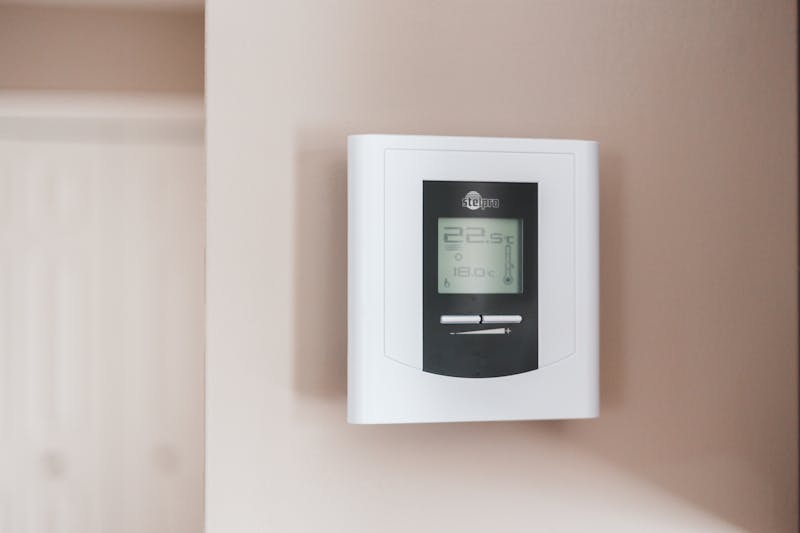
The thermostat is the fastest place to reduce heating cost. The Department of Energy notes that setting the thermostat back 7 to 10 degrees for about eight hours a day can save up to about 10 percent on heating and cooling for many homes.
Common winter targets:
- Home and awake: 68 degrees F
- Sleeping: 60 to 65 degrees F if comfortable
- Away for work or school: 60 to 62 degrees F
- Vacation: 55 to 60 degrees F, with plumbing freeze protection in mind
Avoid extreme setbacks if you have a heat pump with electric resistance auxiliary heat. A large recovery can trigger expensive backup heat. Use a smart thermostat with heat pump balance settings or ask your HVAC technician to configure lockouts and recovery behavior.
The Google Nest Learning Thermostat can build a schedule automatically. The Ecobee SmartThermostat Premium is useful when remote sensors help avoid overheating one area to satisfy a cold hallway thermostat.
Stop paying for blocked airflow
Forced-air heating systems need clean airflow. A clogged filter makes the blower work harder and can cause a furnace to run hotter than designed. In severe cases, the furnace trips on high limit and short cycles.
Do this before looking for expensive causes:
- Replace the air filter.
- Make sure the filter is installed in the correct direction.
- Open supply registers and return grilles.
- Move furniture and rugs away from vents.
- Vacuum return grilles and registers.
- Check that the blower compartment door is fully seated.
If airflow is still weak after these steps, schedule service. The problem could be a dirty blower wheel, undersized return duct, closed damper, or failing motor.
Use sunlight and window coverings
South-facing windows can provide useful solar heat on clear winter days. Open curtains during sunny hours and close them at night to reduce radiant heat loss near cold glass.
For older windows, cellular shades or thermal curtains can improve comfort. Plastic window insulation film is inexpensive and can help with leaky single-pane or poorly sealed windows, especially in rentals where permanent upgrades are not practical.
Window coverings do not replace air sealing or insulation, but they can reduce drafts and comfort complaints near seating areas.
Seal drafts before adding insulation
Air leaks carry warm air out of the home and pull cold air in. Insulation slows conductive heat loss, but it cannot stop air moving through gaps.
High-impact leakage points include:
- Attic hatches and pull-down stairs
- Plumbing and wiring penetrations into the attic
- Gaps around chimneys and flues, using fire-rated materials where required
- Rim joists in basements
- Window and door trim gaps
- Exterior wall penetrations for pipes, cables, and vents
- Recessed lights that are not properly sealed
Use weatherstripping for moving parts, caulk for small gaps, and appropriate foam or fire-rated sealant for larger penetrations. Combustion vent clearances and electrical safety matter, so do not seal blindly around flues, chimneys, or old wiring.
Improve attic insulation
Attic insulation is often one of the best building-shell upgrades because heat rises and attic access is usually easier than wall access. The right target R-value depends on climate zone. Northern homes generally need more attic insulation than southern homes.
Signs your attic insulation may be underperforming:
- Joists are visible above insulation
- Insulation is uneven, compressed, or wind-washed
- Snow melts unevenly on the roof
- Upstairs rooms lose heat quickly
- Ice dams form near eaves
- Recessed lights or attic hatches are unsealed
Air seal first, then add insulation. If you add insulation over leaks, warm moist air can still reach the attic and condense on cold surfaces.
Seal and insulate ducts
If your furnace or heat pump uses ducts in an attic, crawl space, garage, or unconditioned basement, duct losses can be a major heating cost driver. Leaky supply ducts waste heated air. Leaky return ducts can pull cold, dusty, or damp air into the system.
Look for disconnected ducts, crushed flex duct, gaps at joints, and missing insulation. Seal accessible joints with duct mastic or UL 181-rated foil tape. Do not use cloth duct tape for permanent duct sealing.
Professional duct sealing is worth considering when:
- Ducts are hard to access
- Rooms are very uneven
- Utility bills are high despite normal thermostat settings
- There is visible dust streaking near duct joints
- Return ducts run through attics or crawl spaces
See how to seal HVAC ductwork for materials and safety cautions.
Maintain the heating equipment
Annual maintenance keeps the system operating safely and efficiently. For furnaces, a technician should inspect burners, ignition, venting, safety controls, electrical components, blower operation, temperature rise, and combustion where appropriate. For heat pumps, service should include outdoor coil condition, defrost operation, refrigerant performance, airflow, and auxiliary heat controls.
Homeowners should:
- Replace filters on schedule.
- Keep the furnace or air handler area clear.
- Test carbon monoxide alarms.
- Keep heat pump outdoor units clear of snow and leaves.
- Report unusual sounds, smells, short cycling, or weak airflow.
Maintenance rarely turns an old inefficient furnace into a high-efficiency model, but it can prevent waste caused by dirty components and unsafe operation.
Use space heaters carefully
Portable electric space heaters can help if you use one occupied room while keeping the rest of the house cooler. They are not a good whole-house savings strategy because electric resistance heat is expensive per unit of heat in many markets.
Safety rules:
- Plug space heaters directly into wall outlets, not extension cords.
- Keep three feet of clearance from bedding, curtains, and furniture.
- Use models with tip-over and overheat shutoff.
- Turn them off when sleeping or leaving the room.
- Do not use unvented combustion heaters indoors.
Know when replacement makes sense
If the heating system is old, unreliable, or expensive to run, replacement may be the best long-term fix.
Consider replacement when:
- A gas furnace is 15 to 20 years old and repair costs are rising.
- An oil furnace or boiler needs frequent service.
- Electric resistance heat is causing very high bills.
- A heat pump cannot maintain comfort and uses auxiliary heat often.
- The heat exchanger is cracked or combustion safety is questionable.
- The repair cost approaches a large share of replacement cost.
Compare high-efficiency furnaces, central heat pumps, ductless mini-splits, and dual-fuel systems based on local fuel prices. A heat pump can reduce heating cost compared with electric resistance and may compete well with gas in moderate climates, but utility rates and climate decide the result.
For replacement planning, see signs it is time to replace your furnace and how to choose the right HVAC system.
Sources and further reading
- Department of Energy: Programmable thermostats
- Department of Energy: Air sealing your home
- Department of Energy: Insulation
- Department of Energy: Ducts
Bottom line
Lowering your heating bill starts with reducing wasted runtime and heat loss. Program sensible thermostat setbacks, keep airflow clean, seal drafts, improve attic insulation, and repair ducts before paying for major equipment upgrades. When replacement is due, choose the system based on load calculations, local fuel prices, and the condition of the whole home.

ThermalTechPro Editorial Team
Independent trade-focused editorial team