What Size Air Conditioner Do I Need?
Quick answer
The right AC size starts with square footage, then adjusts for sun exposure, ceiling height, insulation, occupancy, climate, and duct condition. For a whole-home system, use a Manual J load calculation instead of replacing by tonnage alone.
Common questions
- Is 20 BTU per square foot enough for AC sizing?
- It is a rough screening rule for room units, not a final central-air size. Windows, insulation, duct leakage, humidity load, and local design temperatures can move the actual load up or down.
- What happens if an air conditioner is oversized?
- Oversized equipment often short cycles, removes less humidity, creates uneven room temperatures, and can wear out faster. Bigger is not automatically more comfortable.
Source note: Reviewed July 2026 against the article guidance and common HVAC trade practice; final sizing, code, and equipment decisions should be confirmed by a qualified local contractor.
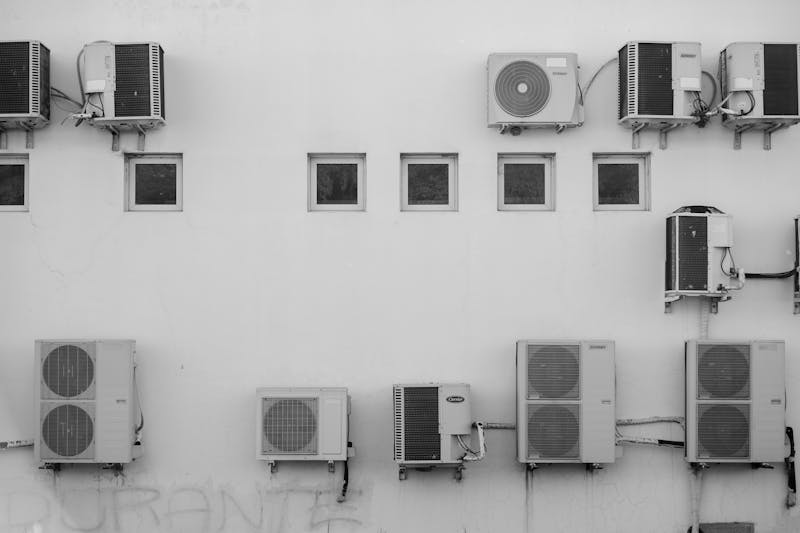
Choosing the right size air conditioner is one of the most important decisions you will make for home comfort and energy efficiency. An undersized unit will run constantly without adequately cooling your space, while an oversized unit will short cycle, wasting energy and leaving your home feeling clammy.
Understanding BTUs and Tonnage
Air conditioner cooling capacity is measured in British Thermal Units (BTUs) per hour. One BTU is the amount of energy needed to raise the temperature of one pound of water by one degree Fahrenheit. For central air conditioning systems, capacity is often expressed in tons, where one ton equals 12,000 BTUs per hour.
Basic Sizing by Square Footage
As a starting point, the industry uses a general guideline of 20 BTUs per square foot of living space. Here is a quick reference table for room air conditioners:
| Room Size (sq ft) | BTUs Needed |
|---|---|
| 100–150 | 5,000 |
| 150–250 | 6,000 |
| 250–300 | 7,000 |
| 300–350 | 8,000 |
| 350–400 | 9,000 |
| 400–450 | 10,000 |
| 450–550 | 12,000 |
| 550–700 | 14,000 |
| 700–1,000 | 18,000 |
| 1,000–1,200 | 21,000 |
For whole-home central air conditioning, a rough estimate is one ton (12,000 BTUs) per 400 to 600 square feet of conditioned space.
Factors That Affect Sizing
Square footage alone does not tell the whole story. Several variables can increase or decrease your actual cooling requirements.
Climate Zone
Homes in hot, humid climates like the Gulf Coast need significantly more cooling capacity than homes in milder regions like the Pacific Northwest. The same 2,000-square-foot home might need a 3-ton unit in Oregon but a 4-ton system in Florida.
Insulation and Air Sealing
Well-insulated homes with tight building envelopes retain conditioned air far better than older, drafty homes. If your home has upgraded insulation in the attic, walls, and crawl space, you may be able to reduce your cooling capacity by 10 to 20 percent compared to the baseline.
Windows and Sun Exposure
Large windows, especially those facing south and west, dramatically increase solar heat gain. A room with floor-to-ceiling west-facing windows may need 50 percent more cooling capacity than a similarly sized room with minimal windows on the north side.
Consider these adjustments:
- Heavy sun exposure — Increase capacity by 10 percent
- Shaded room — Decrease capacity by 10 percent
- Kitchen — Add 4,000 BTUs to account for appliance heat
Ceiling Height
The standard BTU calculation assumes 8-foot ceilings. For higher ceilings, increase the BTU estimate proportionally. A room with 10-foot ceilings has 25 percent more air volume than the same room at 8 feet, so add roughly 25 percent to the cooling requirement.
Occupancy
Each person generates about 400 BTUs of body heat per hour. For rooms regularly occupied by more than two people, add 400 BTUs per additional person.
The Manual J Calculation
The gold standard for determining the correct AC size is a Manual J load calculation, developed by the Air Conditioning Contractors of America (ACCA). The next project steps are equipment selection and duct design; see our Manual J vs. Manual S vs. Manual D comparison for the complete handoff. This comprehensive assessment accounts for:
- Room-by-room measurements
- Insulation R-values
- Window types, sizes, and orientations
- Air infiltration rate
- Internal heat gains from people, lighting, and appliances
- Local climate data
A Manual J calculation is typically performed by an HVAC contractor using specialized software. Most building codes require it for new construction and major renovations.
Common Sizing Mistakes
Going Too Big
Many homeowners assume bigger is better, but oversizing causes real problems:
- Short cycling — The unit cools the space too quickly and shuts off before removing humidity
- Higher energy bills — Frequent starts consume more power than steady operation
- Uneven temperatures — Rooms far from the air handler may not receive adequate airflow
- Premature wear — Frequent starting stresses the compressor and shortens system life
Going Too Small
An undersized unit runs almost constantly, which also creates issues:
- Inability to reach set temperature on the hottest days
- Higher energy bills from continuous operation
- Excessive wear on components
- Inadequate dehumidification
Getting a Professional Assessment
While online BTU calculators provide a reasonable starting point for room air conditioners, whole-home systems should always be sized by a qualified HVAC professional. A reputable contractor will perform a Manual J calculation, inspect your existing ductwork, and recommend a system that matches your home’s specific cooling load.
When comparing estimates, ask each contractor to explain their sizing methodology. If a contractor simply replaces your old unit with the same size without doing a load calculation, get a second opinion.
The right size air conditioner will keep your home comfortable, manage humidity effectively, and operate efficiently for years to come. Once you’ve determined the right size, review HVAC efficiency ratings like SEER2 to choose the most efficient model for your climate. Once properly sized and installed, a smart thermostat maximizes the performance of your new system. The Ecobee SmartThermostat Premium monitors both temperature and humidity and includes room sensors — so the system responds to where you actually are in the house, not just the hallway where the thermostat is mounted.
See Also
- How to Choose the Right HVAC System for Your Home — sizing is just one part of the system selection process
- How to Fix Common AC Problems — short cycling from an oversized unit is one of the problems covered here

ThermalTechPro Editorial Team
Independent trade-focused editorial team